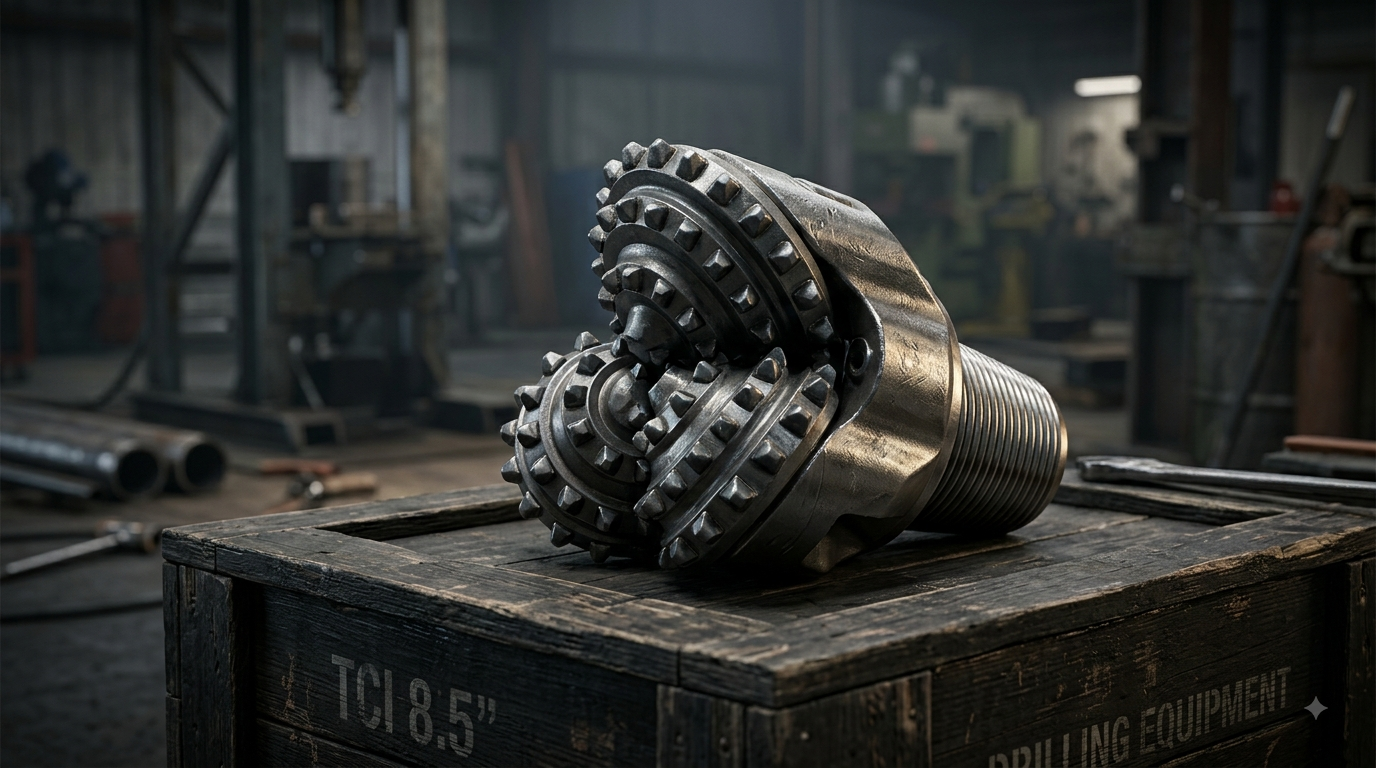
Uncertainty during the purchasing phase often leads to premature downhole failures and inflated drilling costs. Knowing how to select the right IADC code for tricone bits is the single most critical decision for procurement managers and directional drillers looking to maximize Rate of Penetration (ROP) while preventing catastrophic cone loss. Misjudging formation hardness by even one IADC classification grade can result in severe insert breakage or ruined bearing seals within hours of rotation.
The International Association of Drilling Contractors (IADC) classification system standardizes roller cone bits into a four-character code (e.g., IADC 517, IADC 537, IADC 637). The first three digits represent mechanical structure, while the final letter defines additional features such as shirttail hardfacing or directional guidance.
Understanding the 4-Digit IADC Code Structure
- First Digit (1 to 8) – Cutting Structure & Metallurgy:
- 1, 2, 3: Milled Steel Tooth bits designed for soft, medium, and hard formations with low compressive strength.
- 4, 5, 6, 7, 8: Tungsten Carbide Insert (TCI) bits engineered for soft, medium, hard, and extremely abrasive rock structures (such as quartzite and granite).
- Second Digit (1 to 4) – Formation Hardness Sub-Class:
- Indicates a finer scale of rock hardness within a specific category, where
1represents the softest end and4represents the hardest, most abrasive end.
- Indicates a finer scale of rock hardness within a specific category, where
- Third Digit (1 to 7) – Bearing & Seal Type:
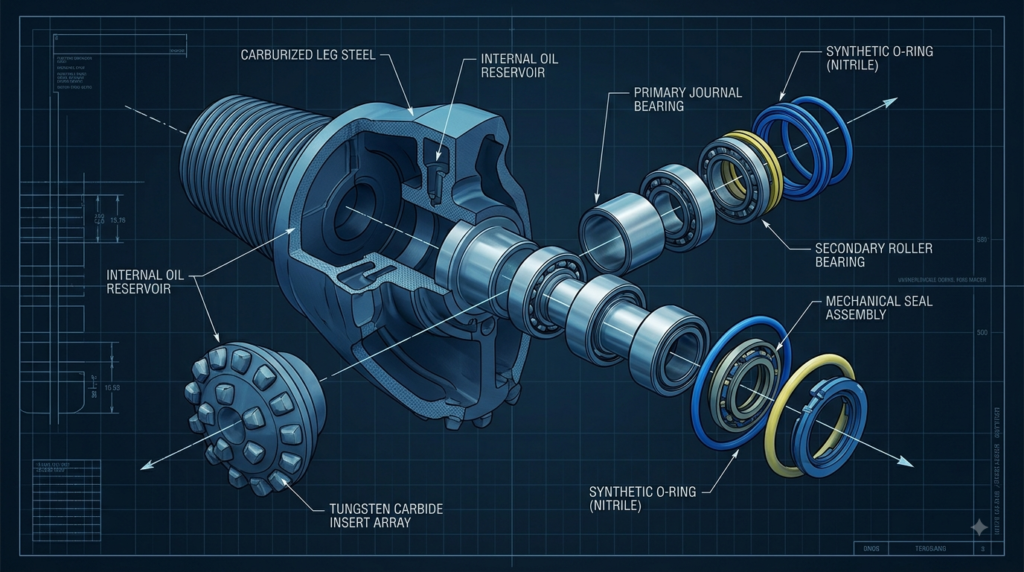
1 to 3: Air-cooled or open unsealed bearings (primarily for surface mining and water wells).4 & 5: Standard rubber O-ring sealed roller bearings.6 & 7: Premium journal bearings (friction bearings) with advanced elastomeric or metal-to-metal seals for deep, high-torque oilfield applications.
- Fourth Character (Letter Code) – Special Features:
- G: Extra gauge protection on bit legs and shirttails.
- S: Standard steel tooth configuration.
- L: Lug pads or specialized hardfacing for high-RPM motor applications.
Technical IADC Selection Matrix for Rock Formations
| IADC Code | Formation Type | Compressive Strength (PSI) | Recommended Cutting Structure | Bearing & Seal System |
| IADC 117 | Soft shale, unconsolidated sand | < 5,000 PSI | Long, widely spaced steel teeth | Sealed roller bearing |
| IADC 517 | Medium sandstone, soft limestone | 8,000 – 15,000 PSI | Chisel TCI inserts, wide pitch | Premium journal bearing |
| IADC 537 | Hard limestone, abrasive sandstone | 15,000 – 25,000 PSI | Conical/chisel TCI inserts | Premium journal bearing |
| IADC 637 | Hard dolomite, granite, quartzite | > 25,000 PSI | Short, high-density spherical TCI | Metal-to-metal journal seal |
Selecting the wrong bit type for interbedded formations forces operators to run sub-optimal Weight on Bit (WOB), drastically shortening bit life. When in doubt regarding formation lithology or hydraulic flow rates, request a technical quote from our engineering specialists, who can match your well log data to the ideal cutter configuration.
At Lilin Bit, every roller cone is forged from high-alloy steel and subjected to deep carburizing heat treatment. To learn more about our ISO 9001 quality controls and manufacturing capabilities, visit our about us page.