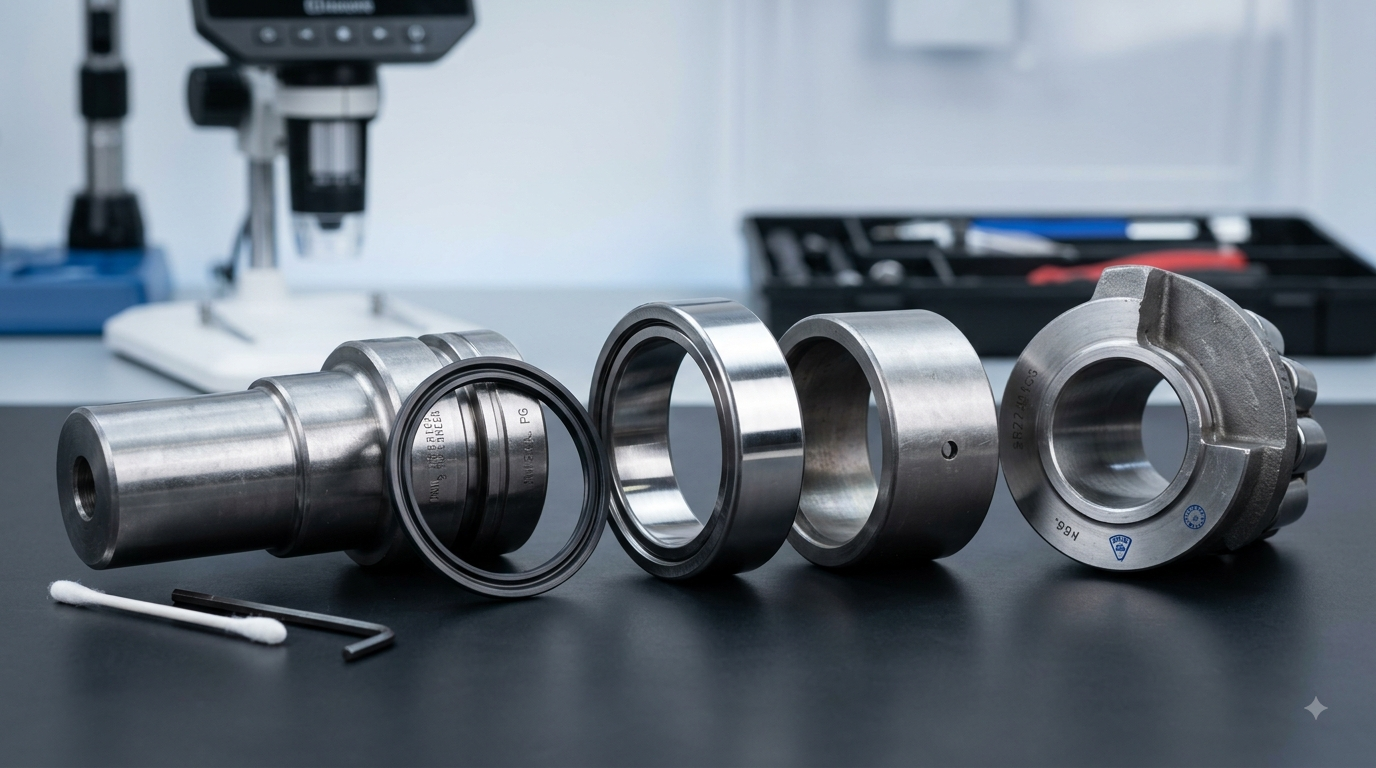
A downhole bearing failure on a tricone drill bit is one of the most expensive hazards in well construction. When a bearing seizes, the cone locks up, leading to rapid flat-spotting of tungsten carbide compacts, shirt-tail destruction, and eventually, cone loss in the hole. Recovering a lost cone requires complex fishing operations using magnetic or basket tools, adding days of Non-Productive Time (NPT) to your rig schedule.
Understanding why roller cone bearings fail—whether due to thermal seal degradation, mechanical overloading, or abrasive fluid ingress—is essential for optimizing drilling parameters and enforcing strict supplier quality standards.
The Core Failure Modes of Roller Cone Bearings
Roller cone bit bearings operate under extreme mechanical stresses, elevated bottom-hole temperatures (BHT), and corrosive drilling muds. Failures generally trace back to four primary root causes:
- Thermal Seal Breakdown: Standard rubber O-rings harden and crack when exposed to downhole temperatures exceeding 300°F (149°C) combined with high RPM. Once the seal fails, drilling fluid flushes out grease and introduces abrasive solids into bearing races.
- Journal Spalling & Overloading: Applying excessive Weight on Bit (WOB) beyond engineering limits crushes the lubrication film, causing metal-to-metal contact, micro-welding, and surface metal flaking (spalling).
- Pressure Compensator Failure: Faulty pressure compensation diaphragms fail to equalize pressure between the internal grease reservoir and external mud column, causing grease leakage or seal rupture.
- Incorrect Break-In Procedure: Running a new rock bit directly to high WOB and RPM without a gradual bottom-hole break-in period damages virgin bearing races before a uniform wear pattern is established.
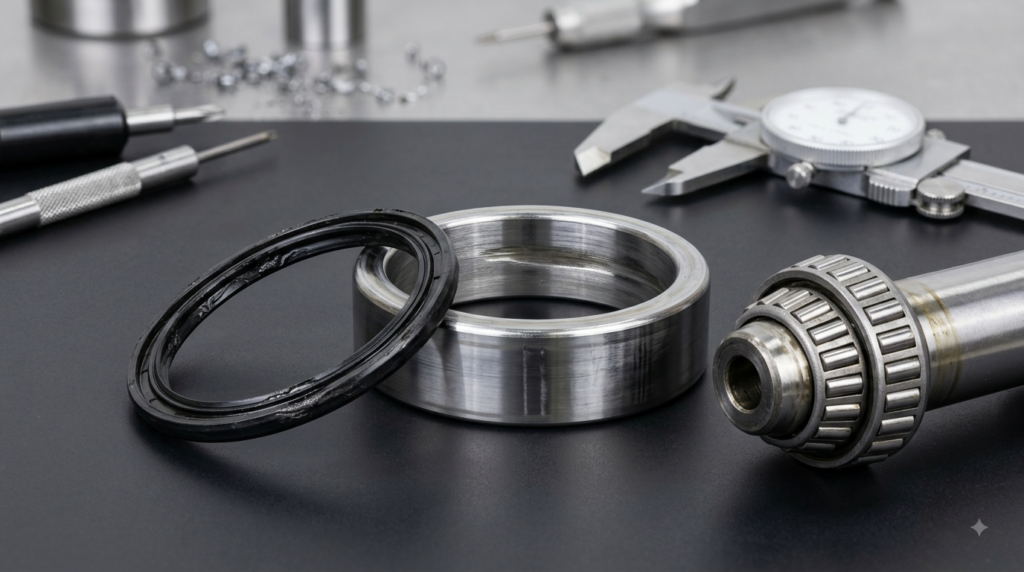
Failure Analysis & Prevention Matrix for Tricone Bearings
| Bearing Failure Symptom | Primary Root Cause | Contributing Operational Factor | IADC Dull Code | Field Prevention Protocol |
| Locked Cone / Flat Spotting | Total Bearing Seizure | Excess WOB / Loss of Lubrication | B – X – L | Reduce WOB; Use Journal Bearings |
| Eroded Shirt-Tail & Seal Exposed | Abrasive Fluid Ingress | Inadequate Hardfacing Protection | E – S – G | Upgrade Shirt-Tail Hardfacing / Leg Compacts |
| Hardened / Cracked Elastomer Seal | Thermal Degradation | High RPM / High Bottom-Hole Temp | S – F – T | Switch to Premium HNBR or Metal Seals |
| Spalled Journal Race | Excessive Impact Load | Severe Stick-Slip / Bit Bouncing | B – J – S | Optimize WOB/RPM; Run Shock Sub |
Quality Protocols to Guarantee Zero Bearing Failure
To eliminate bearing risks before bits ever reach the rig floor, Lilin Bit enforces 100% quality inspection gates across all manufactured roller cone bits:
- Deep Carburizing Heat Treatment: Ensures bearing journals possess an extremely hard surface skin paired with a shock-absorbing ductile core.
- High-Pressure Seal Testing: Every assembled bit undergoes 100% pneumatic and hydraulic seal integrity testing to verify pressure retention.
- Premium Metallurgical Alloys: Precision-ground journal races coated with silver alloy plating to reduce friction during high-load operations.
Learn about our API Spec 7-1 certified quality management system and testing laboratories on our about us page.
Protect your rig from costly downhole fishing jobs. Contact us today to learn more about our high-reliability sealed journal tricone bits.