Choosing the right tricone bit is one of the most important decisions in rotary drilling.
A bit that performs well in soft sandstone may wear much faster in hard granite. A cutting structure designed for aggressive penetration may not be the best choice for highly abrasive rock. Even two tricone bits with the same diameter can produce very different drilling results because of differences in carbide inserts, cone geometry, bearings, seals, hydraulics, and manufacturing quality.
For drilling contractors, mining companies, water well contractors, and industrial buyers, the real question is not simply:
“Which tricone bit should I buy?”
The better question is:
“Which tricone bit is correctly matched to my formation, drilling parameters, and cost target?”
IADC classification provides an important starting point, but it should always be considered together with formation characteristics and actual drilling performance.
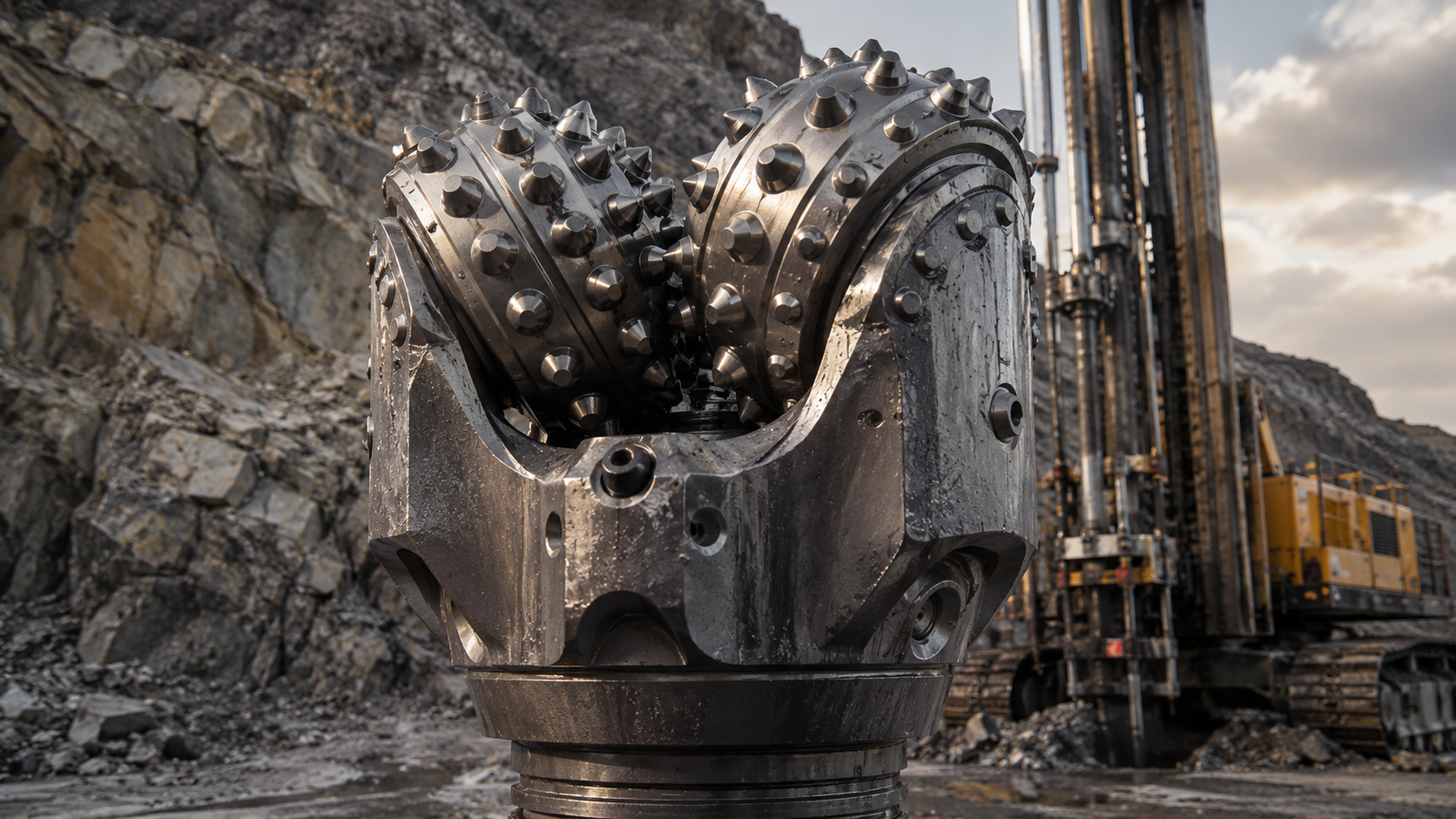
Unlike fixed-cutter PDC bits, which rely primarily on fixed cutting elements and shearing action, tricone bits use three rotating cones equipped with teeth or tungsten carbide inserts. This difference can become important when drilling through changing, fractured, or abrasive rock.
The real challenge is not finding a tricone bit. It is finding a bit whose cutting structure and mechanical design are appropriate for the rock being drilled.
A well-matched bit can help improve penetration, extend useful bit life, and reduce unnecessary trips. A poorly matched bit can increase wear, reduce drilling efficiency, and raise the total cost of drilling.
That is why professional bit selection should combine IADC, geology, bit design, operating parameters, and actual field data.
Contents
- What Is IADC and Why Does It Matter When Choosing a Tricone Bit?
- How Do You Read an IADC Tricone Bit Classification?
- What Formation Data Should You Check Before Choosing a Tricone Bit?
- Should You Choose a TCI or Milled Tooth Tricone Bit?
- What Factors Actually Determine Tricone Bit Quality?
- How Do WOB, RPM and Hydraulics Affect Tricone Bit Performance?
- How Can You Compare Tricone Bits Using Drilling Data?
- What Is the Best Tricone Bit Selection Checklist?
- FAQ About Tricone Bits and IADC
- Conclusion
1. What Is IADC and Why Does It Matter When Choosing a Tricone Bit?
IADC stands for the International Association of Drilling Contractors.
For roller cone and tricone drill bits, the IADC classification provides a common technical reference for communicating bit application and design characteristics.
The main advantage of IADC is communication. Instead of describing a product only as a “hard-rock tricone bit” or a “medium-formation bit,” drilling professionals can use an IADC classification as a common starting point and then compare the actual cutting structure and mechanical design.
However, IADC is not a simple quality ranking.
A higher classification number does not automatically mean that one bit is better than another. The correct classification depends on the formation and drilling environment.
Why IADC Is Only the First Step
A practical selection process should look like this:
Formation → IADC → Cutting Structure → Cone Design → Bearing & Seal → Hydraulics → WOB/RPM → Field Performance
Two bits with similar IADC classifications may still have different:
- carbide insert geometry
- insert density
- cone geometry
- bearing construction
- seal design
- gauge protection
- nozzle configuration
- manufacturing tolerances
That is why IADC should be used to narrow the selection, while the actual engineering details determine whether the bit is suitable for the application.
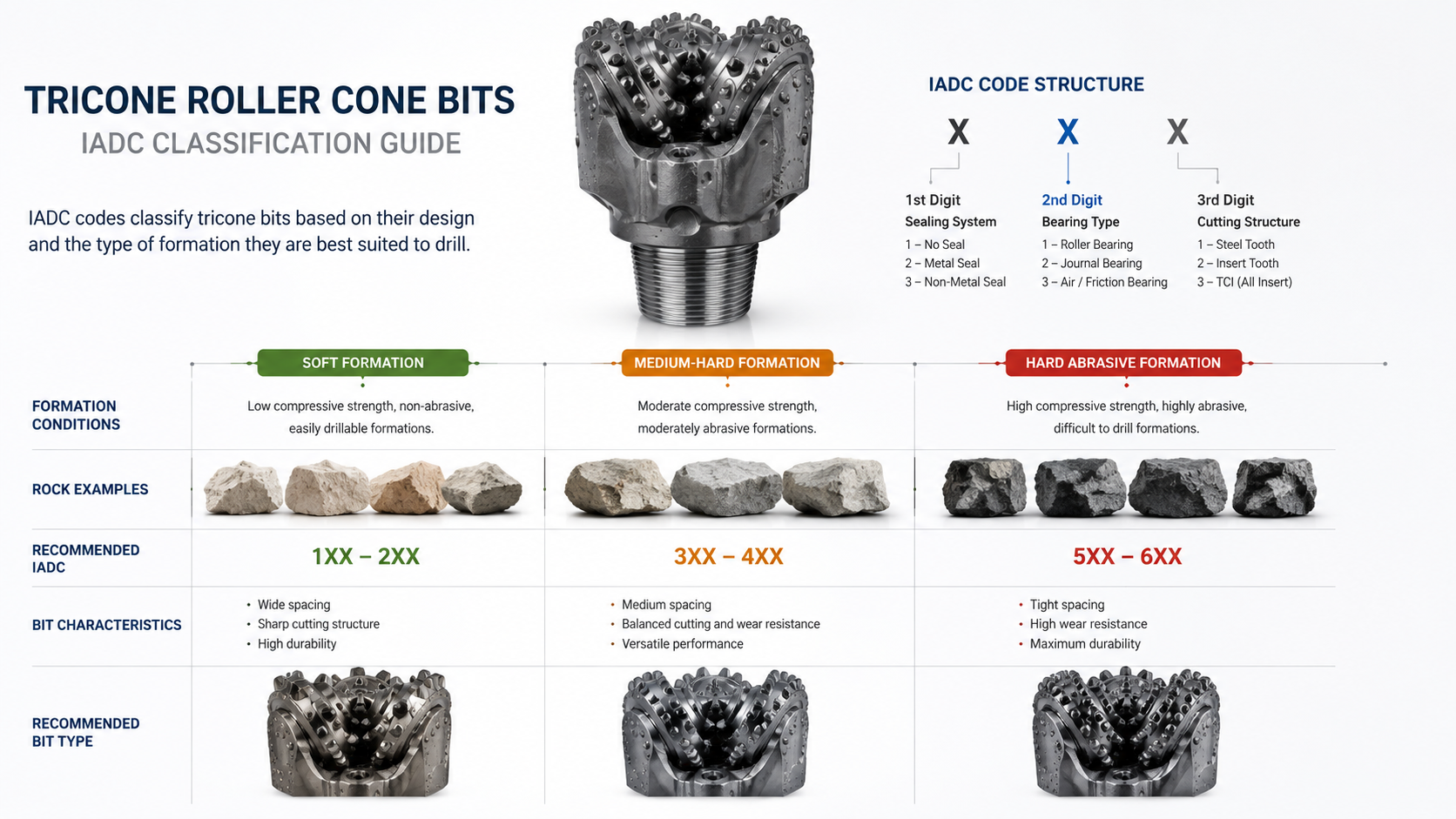
2. How Do You Read an IADC Tricone Bit Classification?
Traditional roller-cone IADC classifications use a three-digit code.
The classification communicates information about the bit’s cutting structure, formation application, and bearing, seal, or related design characteristics.
For buyers, the important point is not simply memorizing every number. It is understanding what the classification means within the complete bit-selection process.
Example: IADC 637
IADC 637 is a useful example for understanding the three-digit format.
| Digit | Reference Meaning | IADC 637 Example |
|---|---|---|
| First digit | Formation hardness category | 6 |
| Second digit | Formation type or subtype | 3 |
| Third digit | Bearing, seal and related features | 7 |
The complete classification should always be considered together with the actual bit construction and drilling application.
What Else Should You Compare?
| Item | What to Compare |
|---|---|
| IADC | Formation application |
| Cutting structure | Tooth or insert geometry |
| TCI grade | Wear and impact characteristics |
| Cone design | Rock-breaking behavior |
| Bearing | Mechanical durability |
| Seal | Bearing protection |
| Gauge protection | Hole-size retention |
| Hydraulics | Cuttings removal |
Do not ask only, “What is the IADC?” Ask, “Why is this IADC suitable for my formation?”
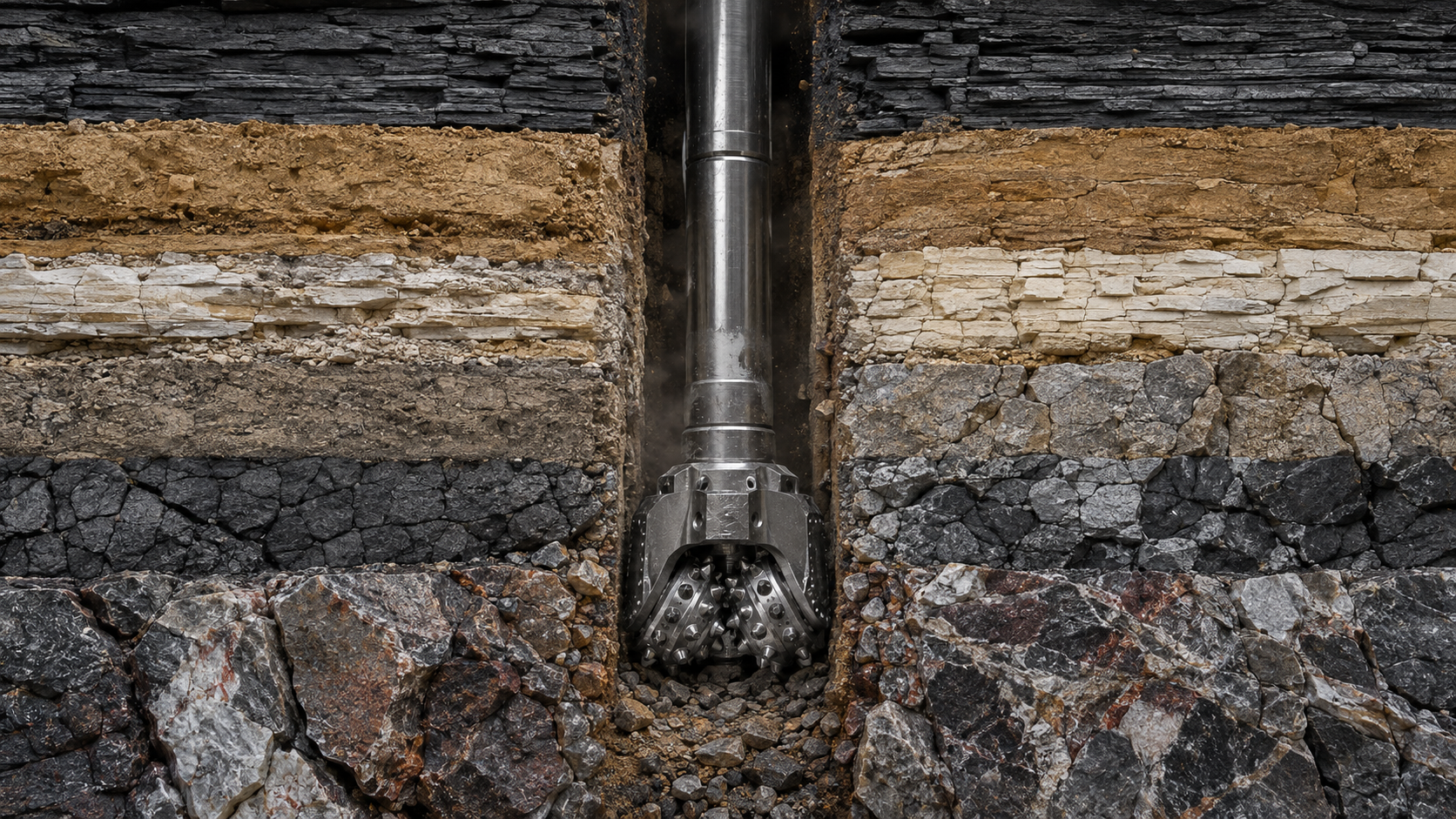
3. What Formation Data Should You Check Before Choosing a Tricone Bit?
Formation should come before final bit selection.
Knowing the hole diameter is not enough. A supplier can make a much more useful recommendation when you provide information about the rock and the drilling system.
Hardness and Abrasiveness Are Different
Hardness describes how resistant the rock is to deformation and breakage.
Abrasiveness describes how aggressively the formation wears the drilling tool.
A formation can be very hard, highly abrasive, fractured, or some combination of all three. Those conditions can place completely different demands on the cutting structure and mechanical system.
| Formation Condition | Main Challenge | Typical Bit Priority |
|---|---|---|
| Soft | Maintaining penetration | Aggressive cutting structure |
| Medium | Balancing penetration and wear | Balanced tooth or insert design |
| Hard | Breaking strong rock | Robust cutting elements |
| Highly abrasive | Accelerated wear | Wear-resistant carbide and gauge protection |
| Fractured | Impact and vibration | Robust cutting structure |
| Sticky | Bit balling | Effective hydraulic cleaning |
| Interbedded | Changing loading conditions | Balanced and adaptable design |
What Information Should You Give Your Supplier?
- Formation type
- Formation hardness
- Formation abrasiveness
- Hole diameter
- Target depth
- Rig information
- WOB
- RPM
- Torque
- Drilling fluid and flow rate
- Previous IADC classification
- Previous bit life
- Previous ROP
- Reason for pulling the previous bit
Previous drilling data is particularly valuable because it tells the manufacturer what worked, what failed, and what should change in the next bit design.
4. Should You Choose a TCI or Milled Tooth Tricone Bit?
This is one of the most important decisions in tricone bit selection.
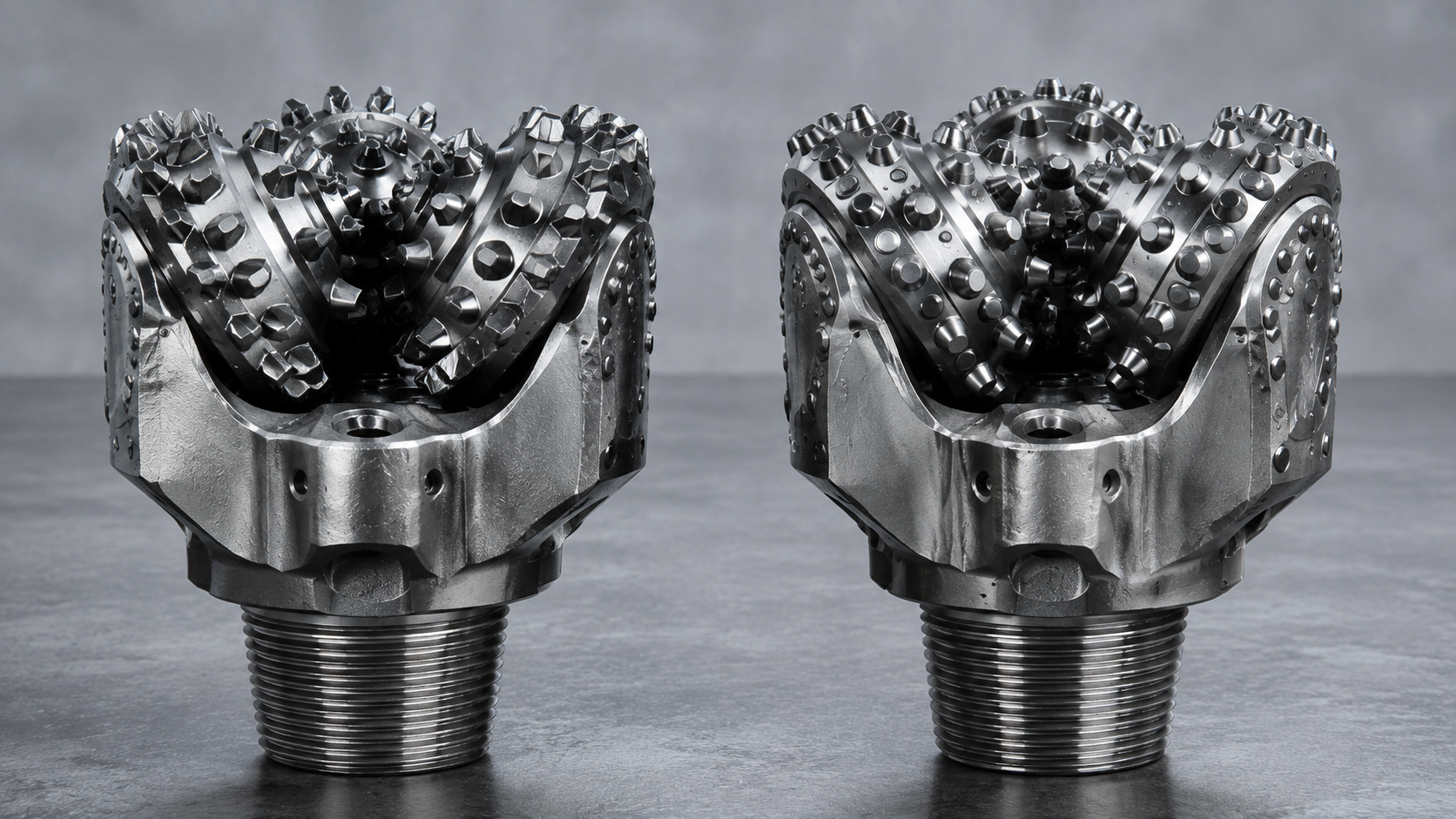
Milled tooth and TCI bits are designed around different cutting requirements, so the formation should determine the choice.
Milled Tooth Tricone Bits
Milled tooth bits use steel teeth machined directly into the cone.
They can provide aggressive tooth penetration and are commonly considered for suitable soft and medium formations where steel tooth wear is manageable.
Typical characteristics include:
- machined steel teeth
- aggressive penetration
- effective performance in suitable formations
- straightforward cutting structure
The main limitation is wear. In very hard or highly abrasive formations, steel teeth can wear substantially faster.
TCI Tricone Bits
TCI means Tungsten Carbide Insert.
TCI bits use tungsten carbide inserts installed into the cones. Insert shape, size, spacing and density can be selected according to the formation and expected drilling conditions.
Common insert geometries include conical, chisel, wedge-type and spherical designs.
| Characteristic | Milled Tooth | TCI |
|---|---|---|
| Cutting element | Machined steel tooth | Tungsten carbide insert |
| Typical formation | Soft to medium | Medium-hard to hard |
| Wear resistance | Lower in severe abrasion | Generally higher |
| Geometry options | Steel tooth geometry | Multiple insert geometries |
| Hard-rock application | Application dependent | Commonly selected |
| Main advantage | Aggressive tooth penetration | Wear resistance and hard-rock capability |
TCI does not automatically mean “better.” A TCI bit can still be the wrong bit if its insert geometry, cone design, or IADC classification does not match the formation.
Unlike PDC bits, which use fixed cutting elements, tricone bits rely on rotating cones and their associated cutting structures.
5. What Factors Actually Determine Tricone Bit Quality?
A tricone bit can have an excellent appearance and still perform poorly in the field.
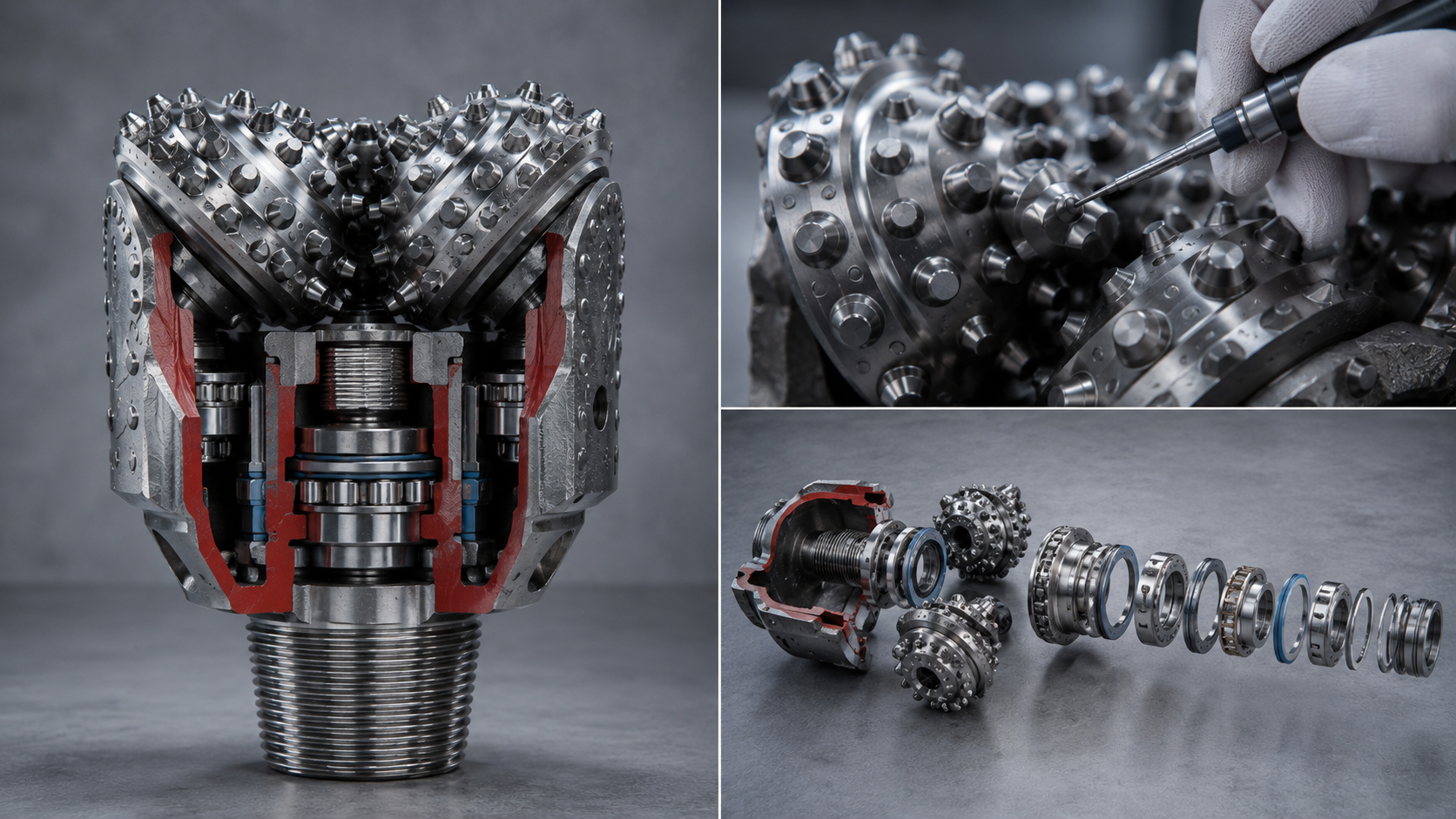
Real tricone bit quality comes from the entire mechanical system working together.
Cutting Structure
The cutting structure determines how the bit interacts with the formation.
Important variables include:
- tooth height
- tooth spacing
- insert shape
- insert size
- insert density
- insert placement
- cone arrangement
A highly aggressive structure may produce excellent penetration in one formation while wearing too quickly in another.
Tungsten Carbide Quality
For TCI bits, carbide inserts are a critical component.
The desired balance is not simply maximum hardness. The insert needs an appropriate combination of hardness, wear resistance, and toughness.
Cone Geometry
Cone geometry affects how the cutting elements contact the formation and how drilling loads are distributed.
Bearing Quality
Bearings support cone rotation while carrying drilling loads. Bearing problems can lead to excessive cone movement, vibration, uneven wear, and premature bit failure.
Seal Quality
Seals help protect the internal bearing system from drilling fluid and contaminants while retaining lubrication where required.
Gauge Protection
Gauge protection helps maintain the intended hole diameter as the bit works against the formation.
Manufacturing Precision
Raw materials, heat treatment, machining accuracy, insert installation, and assembly quality all influence the consistency of the final product.
| Bit Component | What to Evaluate | Performance Impact |
|---|---|---|
| Cutting structure | Shape, height, spacing | ROP and wear |
| Carbide inserts | Grade, geometry, installation | Wear and impact resistance |
| Cones | Geometry and machining | Rock-breaking efficiency |
| Bearings | Construction and precision | Cone rotation and life |
| Seals | Material and installation | Bearing protection |
| Gauge | Protection structure | Hole-size retention |
| Nozzles | Size and position | Hole cleaning |
| Bit body | Material and heat treatment | Structural durability |
| Assembly | Dimensional consistency | Overall reliability |
The visible appearance of a tricone bit is only part of the story. Some of the most important quality differences are inside the bit.
6. How Do WOB, RPM and Hydraulics Affect Tricone Bit Performance?
Choosing the right bit is only part of the drilling equation.
The operating conditions determine how effectively the bit can use its cutting structure.
Three parameters deserve particular attention:
WOB + RPM + Hydraulic Flow
Weight on Bit
WOB, or Weight on Bit, determines the drilling load transferred to the cutting structure.
Too little WOB can produce inefficient formation breakage. Excessive WOB can increase loading on inserts, teeth, cones, and bearings.
Rotational Speed
RPM influences how frequently the cutting structure interacts with the formation.
Higher RPM is not automatically better. Excessive rotational speed can increase friction, heat, vibration, and bearing wear.
Hydraulics
Once the bit breaks rock, the resulting cuttings must be removed from the bottom of the hole.
Poor hydraulic cleaning can contribute to cuttings accumulation, regrinding, bit balling, higher temperature, and lower penetration.
| Parameter | When Too Low | When Too High |
|---|---|---|
| WOB | Inefficient rock breakage | Excessive mechanical loading |
| RPM | Low drilling efficiency | Heat, vibration and wear |
| Flow rate | Poor cuttings removal | Higher hydraulic demand |
| Torque | Limited drilling capability | Increased mechanical loading |
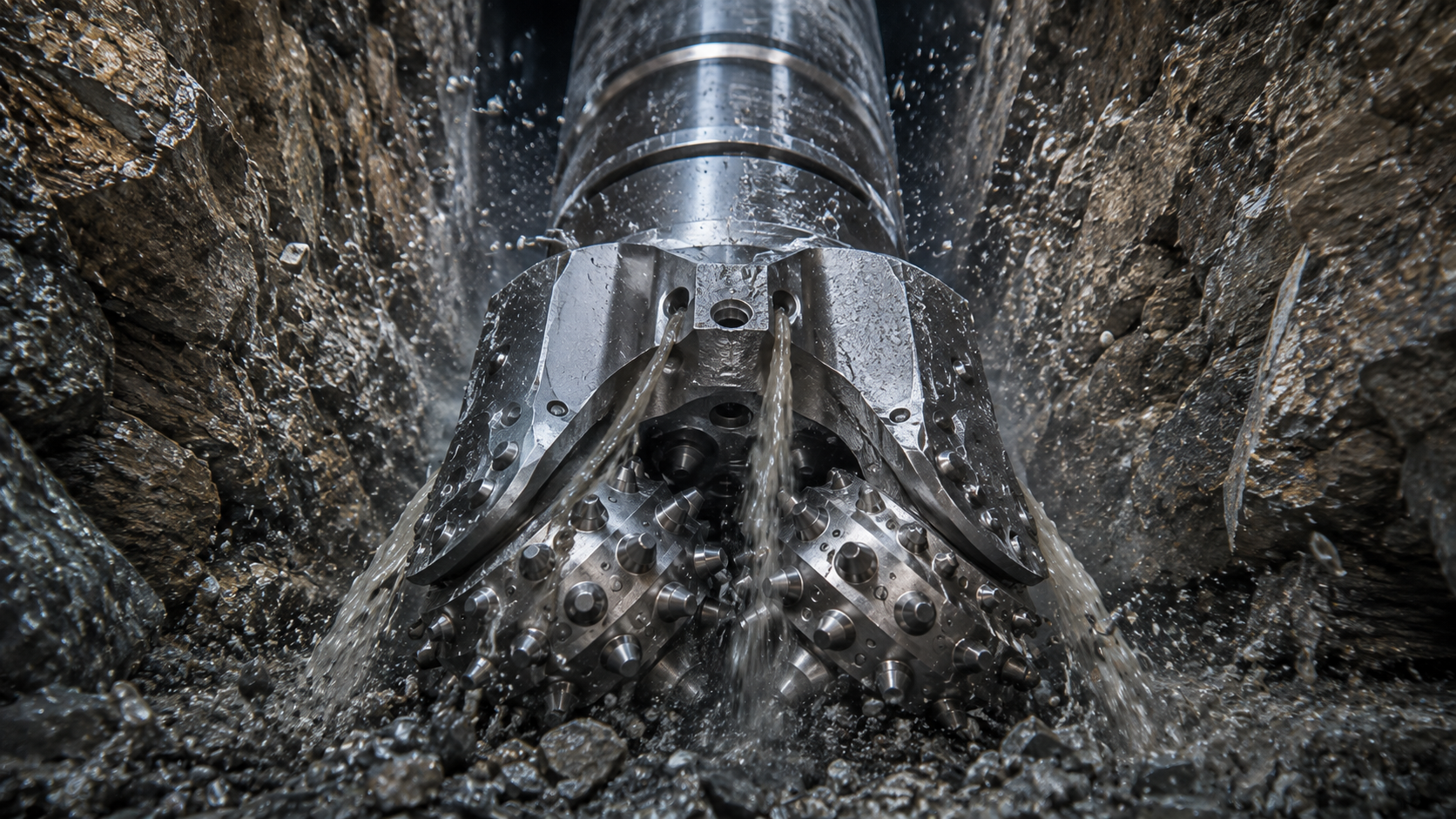
The objective is not to make every drilling parameter as high as possible. The objective is to find an operating window where the bit breaks rock efficiently without creating unnecessary wear.
7. How Can You Compare Tricone Bits Using Drilling Data?
A supplier can describe a bit as “high performance,” but drilling data gives buyers something much more useful: a measurable basis for comparison.
The most useful measurements include:
- ROP
- meters drilled
- operating hours
- WOB
- RPM
- torque
- flow rate
- pull reason
- gauge condition
- insert wear
- bearing condition
Which Numbers Matter Most?
| Measurement | What It Tells You |
|---|---|
| ROP | Drilling speed and productivity |
| Meters per bit | Bit service life |
| Operating hours | Working duration |
| WOB | Cutting load |
| RPM | Rotational condition |
| Torque | Mechanical loading |
| Flow rate | Hydraulic condition |
| Pull reason | Main failure mechanism |
| Gauge condition | Gauge wear |
| Insert condition | Cutting-element wear |
| Bearing condition | Internal mechanical condition |
What Does Cost per Meter Tell You?
The purchase price of a bit is easy to understand. The more useful measurement is often its direct cost per meter drilled.
Consider this reference calculation:
| Metric | Bit A | Bit B |
|---|---|---|
| Bit purchase price | $2,000 | $2,600 |
| Meters drilled | 500 m | 800 m |
| Direct bit cost per meter | $4.00/m | $3.25/m |
For Bit A:
$2,000 ÷ 500 m = $4.00/m
For Bit B:
$2,600 ÷ 800 m = $3.25/m
Although Bit B costs 30% more to purchase, its direct bit cost per meter is approximately 18.75% lower in this reference calculation.
ROP Can Change the Economics Again
Consider another reference example:
| Metric | Bit A | Bit B |
|---|---|---|
| ROP | 5 m/h | 7 m/h |
| Meters drilled | 500 m | 800 m |
| Bit price | $2,000 | $2,600 |
Using these reference numbers, Bit B has an example ROP that is:
The example bit life changes from 500 m to 800 m:
These figures are calculation examples rather than claims about actual field performance.
The point is simple: buyers should evaluate both drilling speed and bit life instead of looking only at purchase price.
Why Pull Reason Is So Important
Suppose a bit drills 600 meters.
That sounds impressive, but the number alone does not explain performance.
The bit may have been pulled because:
- the formation changed
- the gauge became undersized
- the inserts were worn
- the bearing system failed
- the planned section was completed
These situations have very different meanings.
Field data becomes much more valuable when it includes the reason behind the number.

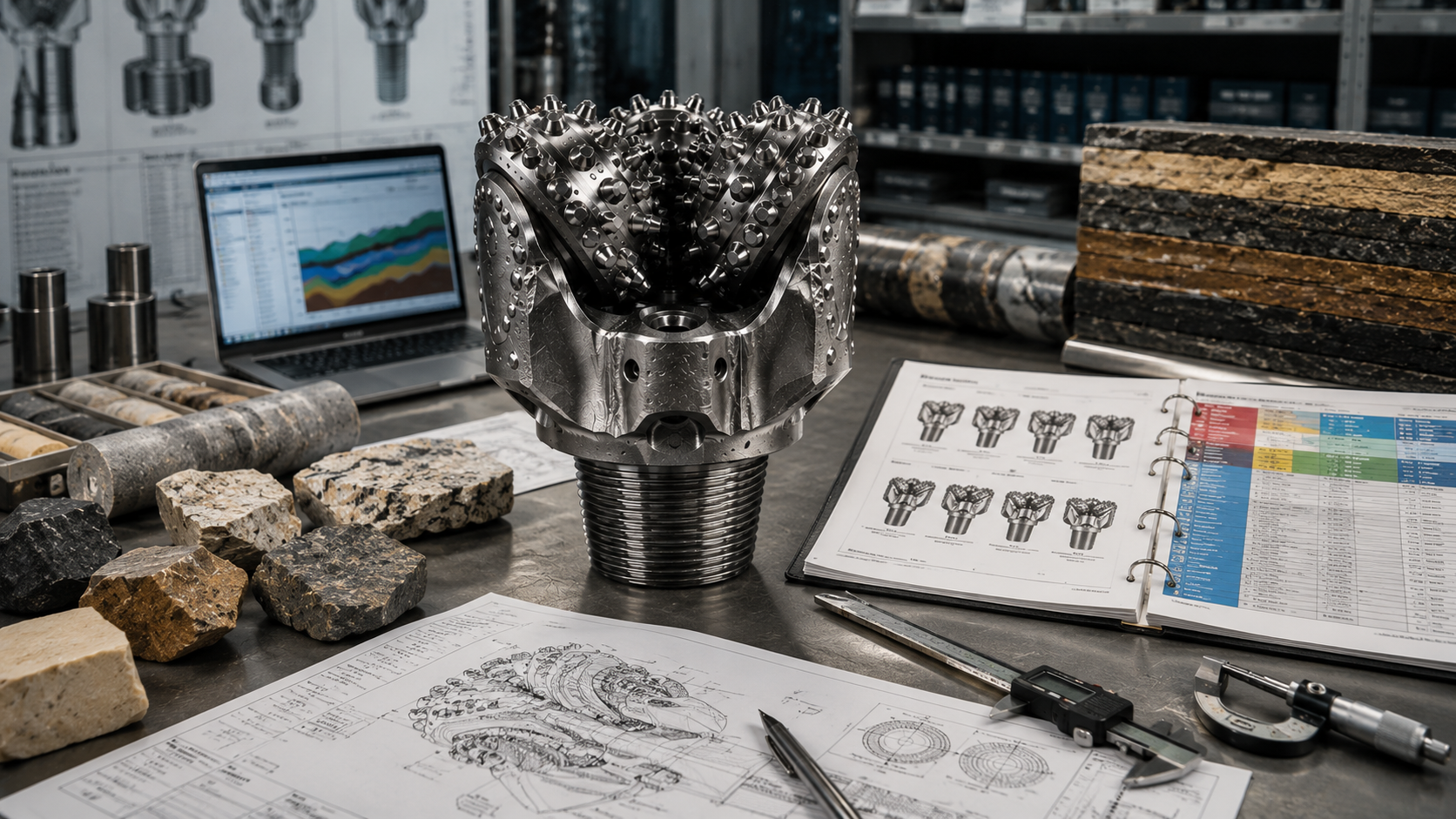
8. What Is the Best Tricone Bit Selection Checklist?
A good tricone bit purchase should answer five basic questions:
What are you drilling?
What does the rig require?
What does the bit need to survive?
What did the previous bit do?
What will the bit cost per meter?
Formation Checklist
| Item | Selection Question |
|---|---|
| Formation | What rock are you drilling? |
| Hardness | How strong is the formation? |
| Abrasiveness | How aggressively does it wear the bit? |
| Fracturing | Is significant impact loading expected? |
| Variation | Does the formation change with depth? |
Bit Design Checklist
| Item | Selection Question |
|---|---|
| IADC | Does the classification match the formation? |
| Cutting structure | TCI or milled tooth? |
| Inserts | Is the geometry suitable for the formation? |
| Cone design | Is the aggressiveness appropriate? |
| Bearings | Are they suitable for the drilling conditions? |
| Seals | Is the bearing system adequately protected? |
| Gauge | Is sufficient gauge protection provided? |
| Nozzles | Does the hydraulic configuration match the system? |
Drilling Condition Checklist
| Parameter | Required Data |
|---|---|
| Bit diameter | Actual hole size |
| WOB | Operating range |
| RPM | Operating range |
| Torque | Actual rig capability |
| Flow rate | Available hydraulic capacity |
| Depth | Expected drilling depth |
| Fluid | Drilling-fluid system |
Field-Performance Checklist
| Data | Why It Matters |
|---|---|
| Previous bit IADC | Shows the previous bit category |
| Previous bit life | Provides a performance baseline |
| Previous ROP | Provides a drilling-speed baseline |
| Pull reason | Identifies the main failure mode |
| Insert wear | Shows cutting-structure performance |
| Gauge wear | Shows gauge durability |
| Bearing condition | Shows internal reliability |
| Cost per meter | Measures drilling economics |
9. FAQ About Tricone Bits and IADC
What does IADC mean on a tricone bit?
IADC stands for the International Association of Drilling Contractors. The IADC classification provides a standardized reference for communicating roller-cone bit application and design characteristics.
Is a higher IADC number always better?
No. The correct IADC classification depends on the formation and drilling conditions. A bit designed for a harder formation is not automatically better for a softer formation.
What is the difference between TCI and milled tooth tricone bits?
Milled tooth bits use machined steel teeth, while TCI bits use tungsten carbide inserts. The appropriate choice depends on formation hardness, abrasiveness, impact conditions, and drilling requirements.
Are TCI tricone bits better for hard rock?
TCI bits are commonly selected for harder and more abrasive formations because tungsten carbide inserts provide high wear resistance and strong rock-breaking capability. The insert geometry and overall bit design still need to match the formation.
What affects tricone bit quality the most?
Important factors include cutting structure, carbide quality, cone geometry, bearing design, seal performance, gauge protection, hydraulic design, manufacturing accuracy, heat treatment, and quality control.
How do I choose the correct tricone bit for mining?
Start with the geological formation, then match the IADC classification and cutting structure to the rock. After that, evaluate cone geometry, carbide inserts, bearings, seals, hydraulics, and operating parameters.
How can I compare two tricone bit suppliers?
Compare formation compatibility, IADC classification, cutting structure, bearing system, carbide quality, manufacturing process, meters drilled, ROP, bit price, pull reason, and total cost per meter.
10. Conclusion
Choosing the right tricone bit starts with geology, not price.
The formation determines what the cutting structure needs to accomplish.
IADC helps identify an appropriate bit category.
TCI or milled tooth determines the basic cutting structure.
Cone geometry affects how the bit interacts with the rock.
Carbide quality influences wear and impact resistance.
Bearings and seals influence mechanical reliability.
Gauge protection helps maintain hole diameter.
Hydraulics help remove cuttings and maintain efficient drilling conditions.
WOB and RPM determine how the bit is operated.
And actual field data tells you whether the complete system is working.
The most useful numbers are often simple:
ROP.
Meters drilled.
Operating hours.
Pull reason.
Cost per meter.
A higher purchase price does not automatically mean a higher drilling cost. A lower purchase price does not automatically mean better value.
The better purchasing decision comes from comparing the bit’s performance under actual drilling conditions.
For drilling contractors, mining companies, water well contractors, and industrial buyers, the practical selection process is:
Formation → IADC → Cutting Structure → Cone Design → Carbide → Bearing → Seal → Hydraulics → WOB/RPM → Field Data
That is the foundation of effective tricone bit selection.
A properly matched tricone bit provides the balance between penetration, durability, reliability, and total drilling cost that a drilling project needs.
Need help choosing the right tricone bit?
Send us your bit diameter, formation type, drilling depth, IADC requirement, WOB, RPM, and previous bit performance. Our technical team can help you identify a suitable tricone bit configuration for your application.
CONTACT US