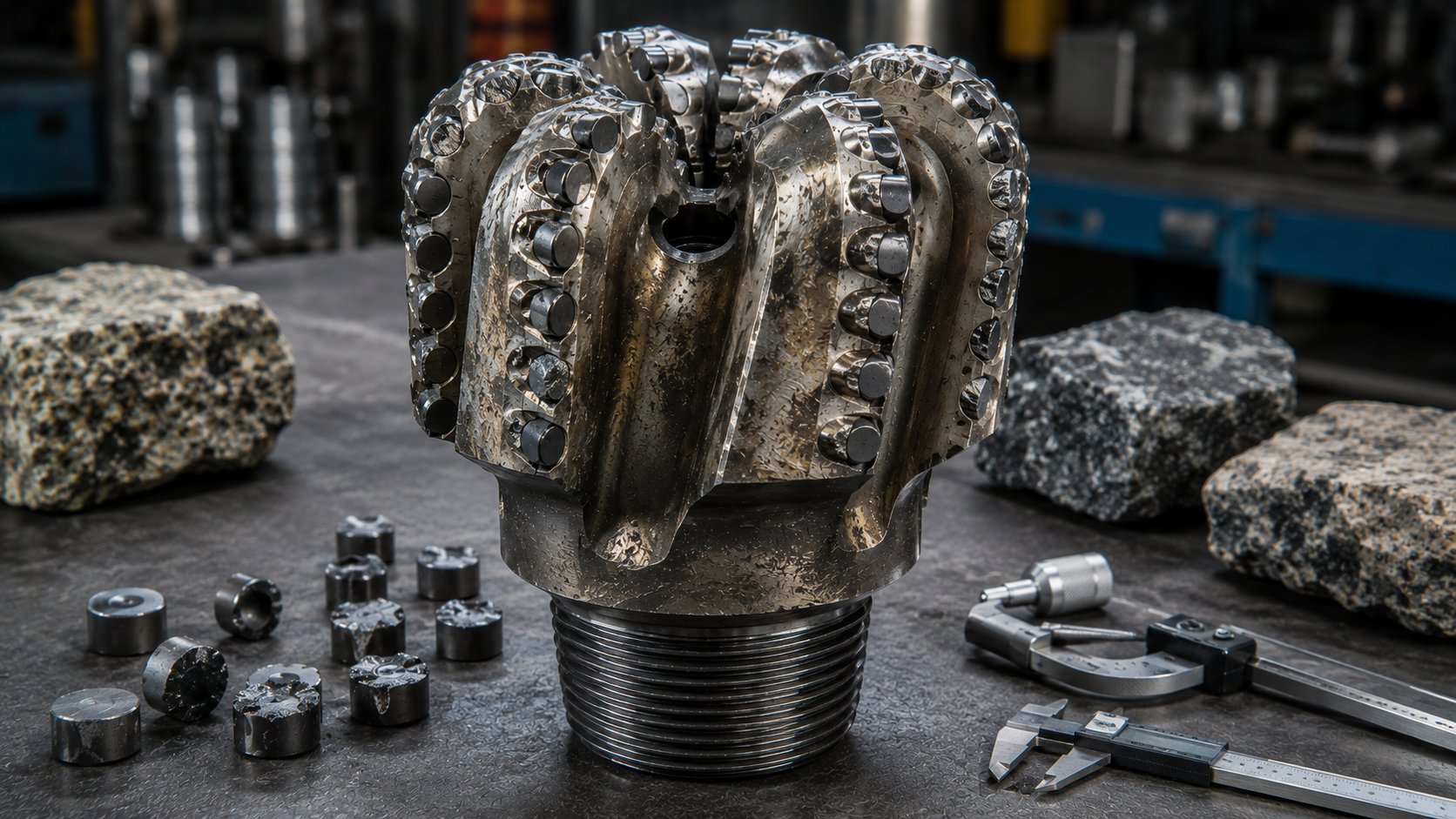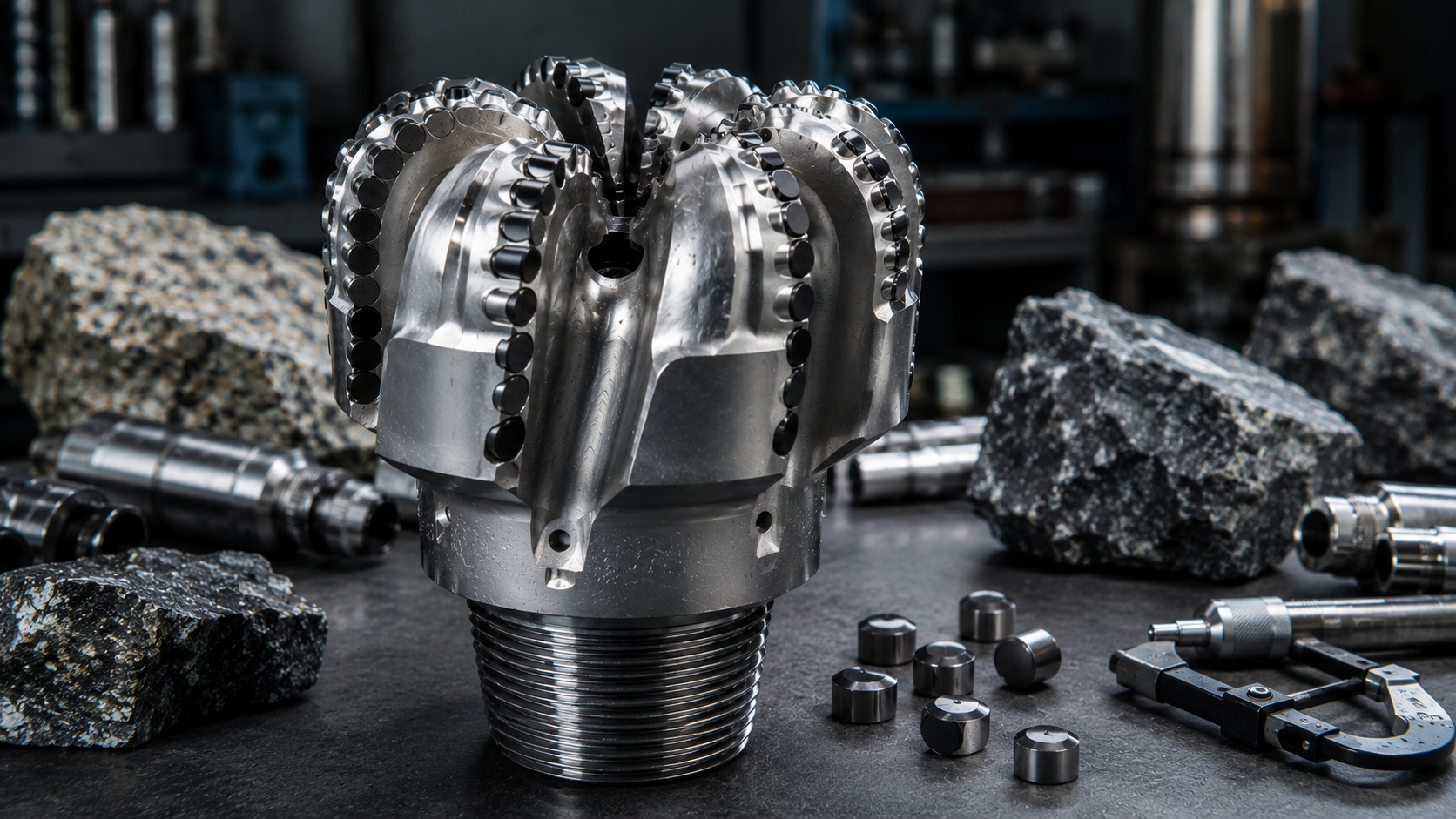
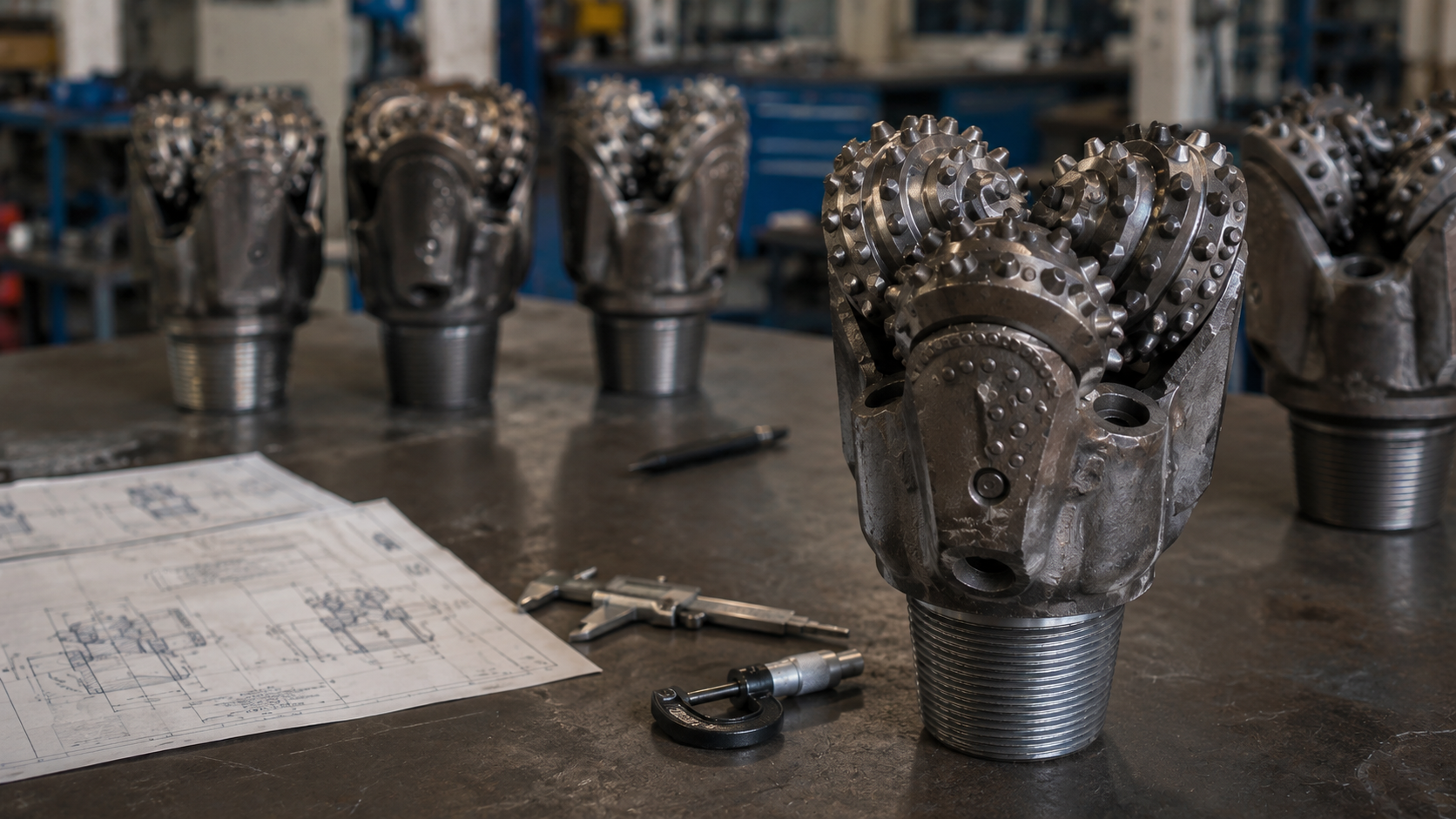
Selecting the right tricone drill bit requires more than choosing the correct diameter and connection. For drilling contractors, engineers, and drill bit buyers, the IADC bit classification system provides an important starting point for matching a roller cone bit to the expected formation.
IADC codes are widely used to describe important characteristics of roller cone drill bits, including their intended formation range and cutting structure.
However, an IADC code should not be treated as a simple three-digit number. Understanding what each part of the classification means can help drilling professionals compare bits, communicate requirements with manufacturers, and avoid selecting a bit that is unsuitable for the formation.
In this guide, we explain what an IADC code means, how to read an IADC tricone bit classification, and how to use IADC information when selecting a tricone drill bit.
What Is an IADC Bit Classification?
IADC stands for the International Association of Drilling Contractors.
The IADC classification system provides a standardized way to categorize roller cone drill bits according to characteristics such as formation type and cutting structure.
For buyers and drilling contractors, the classification provides a common technical language when discussing tricone drill bits with manufacturers and suppliers.
Instead of describing a bit only as:
“a hard-rock tricone bit”
an IADC classification can provide more specific information about the general design and intended formation range.
This makes it easier to compare different roller cone drill bits before selecting one for a particular drilling application.
How Does an IADC Code Work?
Traditional roller cone drill bit classifications commonly use a three-digit IADC code, with each digit providing a different type of information.
A simplified example is:
537
The three digits should be interpreted together rather than individually.
The first digit primarily relates to the formation hardness and general bit series.
The second digit provides additional information about the formation range within that series.
The third digit describes important aspects of the bearing and gauge protection configuration.
The exact interpretation depends on the IADC classification system being used and the specific bit design.
Therefore, an IADC code is best viewed as a classification and communication tool rather than a complete technical specification for a drill bit.
Understanding the First Digit of an IADC Code
The first digit generally indicates the broad formation range for which the bit is designed.
In general terms, lower-numbered series are associated with softer formations, while higher-numbered series are associated with harder formations.
A simplified example includes:
| First Digit | General Formation Range |
|---|---|
| 1 | Soft formation |
| 2 | Soft to medium formation |
| 3 | Medium formation |
| 4 | Medium to hard formation |
| 5 | Hard formation |
| 6 | Very hard formation |
| 7 | Extremely hard formation |
These categories should be used as a general reference rather than an absolute rule.
Actual formation conditions can vary considerably.
For example, two formations classified as “hard” may have very different abrasiveness, compressive strength, fracture characteristics, and drilling behavior.
This is why professional tricone bit selection should consider more than the first digit of an IADC code.
Understanding the Second Digit
The second digit provides a more detailed classification within the general formation series.
It helps distinguish different formation ranges and cutting structure requirements.
For example, two bits may both belong to a hard-formation series but have different second digits because they are designed for different levels or characteristics of formation hardness.
This becomes particularly useful when drilling through formations that are close to the boundary between two bit classifications.
Rather than simply asking:
“Do I need a hard-rock bit?”
a drilling engineer can evaluate:
- Formation hardness
- Compressive strength
- Abrasiveness
- Interbedding
- Expected WOB
- RPM
- Previous bit performance
and then determine whether the selected IADC classification is appropriate.
Understanding the Third Digit
The third digit provides information related to the bit’s bearing and gauge protection configuration.
This is important because bearing performance can directly influence tricone bit life.
Roller cone bits operate under substantial mechanical loads. If the bearing system cannot withstand the expected drilling conditions, premature failure can occur even when the cutting structure is suitable for the formation.
The third digit may therefore provide useful information when comparing different bit configurations.
However, buyers should still request detailed technical information from the manufacturer, including:
- Bearing type
- Sealing system
- Gauge protection
- Cone design
- Insert configuration
- Nozzle configuration
- API connection
An IADC classification does not replace a complete drill bit specification.
Why IADC Classification Is Important for Tricone Bit Buyers
For international drill bit buyers, IADC classification can make communication much easier.
Imagine a buyer simply tells a manufacturer:
“I need a 12 1/4-inch tricone bit for hard rock.”
This provides useful information, but it may not be enough to determine the ideal design.
A better technical request could include:
- Bit diameter: 12 1/4 inch
- Formation: hard limestone
- Formation abrasiveness: high
- Previous IADC code: 637
- WOB: specific operating range
- RPM: specific operating range
- Drilling depth
- Previous ROP
- Previous bit life
- API connection
This gives the manufacturer much more information for recommending the appropriate bit.
IADC Code Does Not Tell You Everything
One of the biggest mistakes buyers make is assuming that the IADC code completely defines a tricone drill bit.
It does not.
Two tricone bits with the same IADC classification can still have different designs and performance characteristics.
Differences may include:
Tungsten Carbide Insert Design
TCI inserts can vary in:
- Shape
- Diameter
- Length
- Placement
- Exposure
- Carbide grade
These differences can significantly affect rock-breaking performance and wear resistance.
Cone Geometry
Cone geometry influences how the cutting structure interacts with the formation.
Different applications may require different cone designs and cutting structures.
Bearing System
Bearing configuration has a major influence on bit durability.
A bit intended for demanding drilling conditions may require a more robust bearing and sealing system.
Gauge Protection
Gauge wear can affect hole diameter and overall drilling performance.
Additional gauge protection may therefore be important when drilling abrasive formations.
Hydraulic Design
Nozzle size, placement, and hydraulic configuration influence bottom-hole cleaning.
Effective cleaning is particularly important in formations where cuttings can accumulate around the bit.
IADC Code vs Actual Formation Conditions
A common misconception is:
“If my previous bit was IADC 637, I should simply buy another 637.”
Not necessarily.
Your previous bit’s performance should be analyzed before ordering the next bit.
For example, if the previous bit experienced:
- Excessive insert wear
- Cone shell wear
- Bearing failure
- Gauge loss
- Bit balling
- Poor ROP
- Severe vibration
then simply replacing it with another bit carrying the same IADC code may not solve the underlying problem.
The correct approach is to evaluate the dull condition of the previous bit and determine why it performed the way it did.
How to Use Previous Bit Performance for IADC Selection
Previous drilling data is extremely valuable.
Before ordering a new tricone drill bit, collect information from the previous run.
Useful data includes:
Bit size
IADC code
Formation
Depth drilled
ROP
WOB
RPM
Drilling time
Bit hours
Reason for pulling the bit
Dull condition
This information allows the drill bit manufacturer to determine whether the previous bit was properly matched to the formation.
For example:
If the bit achieved good ROP but suffered severe gauge wear, the next bit may require improved gauge protection.
If the bit had excellent gauge retention but very low ROP, a more aggressive cutting structure may be considered.
If bearing failure occurred before significant cutting-element wear, the bearing system and drilling parameters should be investigated.
This is much more useful than simply changing the IADC number.
How to Select an IADC Tricone Bit for Soft Formation
Soft formations generally require aggressive cutting structures.
Typical examples include:
- Soft shale
- Clay
- Marl
- Soft limestone
- Unconsolidated formations
Important considerations include:
- High cutting aggressiveness
- Adequate tooth or insert spacing
- Effective hydraulic cleaning
- Resistance to bit balling
- Suitable cone offset
For soft and sticky formations, bottom-hole cleaning is particularly important.
A bit that becomes packed with formation material may experience a significant reduction in effective cutting action and ROP.
How to Select an IADC Tricone Bit for Medium Formation
Medium formations require a balance between cutting aggressiveness and durability.
Typical formations may include:
- Medium shale
- Sandstone
- Limestone
- Moderately consolidated rock
TCI tricone bits are often considered for these applications because tungsten carbide inserts provide good wear resistance.
However, insert geometry should still be selected according to the specific formation.
The objective is to maintain efficient penetration without creating unnecessary insert wear or vibration.
How to Select an IADC Tricone Bit for Hard Formation
Hard formations require a cutting structure capable of handling high impact and compressive loads.
Typical applications include:
- Hard limestone
- Dolomite
- Hard sandstone
- Highly consolidated rock
- Abrasive formations
For these applications, drilling contractors should pay particular attention to:
- Insert strength
- Insert retention
- Bearing durability
- Gauge protection
- Cone design
- Hydraulic cleaning
- Vibration control
A bit that is too aggressive can suffer excessive insert damage.
A bit that is too conservative may produce poor ROP.
The goal is to find the right balance for the formation.
IADC Classification for TCI vs Milled Tooth Bits
IADC classification is also useful when comparing different roller cone cutting structures.
Milled Tooth Bits
Milled tooth tricone bits use steel teeth machined directly from the cone.
They are often used for softer formations where aggressive cutting is required.
Typical considerations include:
- Tooth aggressiveness
- Tooth wear
- Formation balling
- Cone offset
- Hydraulic cleaning
TCI Bits
TCI tricone bits use tungsten carbide inserts.
They are widely used for medium, hard, and abrasive formations.
Important considerations include:
- Insert shape
- Insert exposure
- Insert spacing
- Carbide durability
- Gauge protection
- Bearing design
The IADC classification can help establish the general formation range, but the detailed bit design still needs to be evaluated.
What Should You Tell a Tricone Bit Manufacturer?
When requesting a quote or technical recommendation, provide as much information as possible.
A professional RFQ can include:
Basic Bit Information
- Bit diameter
- Bit type
- IADC code
- API connection
- Quantity
Formation Information
- Rock type
- Formation hardness
- Compressive strength if available
- Abrasiveness
- Interbedded formations
- Expected drilling depth
Drilling Parameters
- WOB
- RPM
- Mud flow rate
- Pump pressure
- Drilling fluid
- Hole depth
Previous Bit Performance
- Previous IADC
- ROP
- Bit hours
- Drilled footage
- Pulling reason
- Dull grading
This information allows the manufacturer to make a much more informed recommendation.
How to Avoid Choosing the Wrong IADC Bit
Before placing an order, avoid these common mistakes.
Mistake 1: Choosing by IADC Code Alone
An IADC code provides useful classification information, but it does not describe every detail of the bit.
Mistake 2: Copying the Previous Bit
The previous bit may have been unsuitable or may have experienced a specific failure mode.
Mistake 3: Ignoring Abrasiveness
Formation hardness alone is not enough.
Mistake 4: Ignoring Drilling Parameters
A bit designed for one operating range may not perform optimally under another.
Mistake 5: Comparing Only Price
A lower purchase price does not necessarily mean lower drilling cost.
Evaluate:
Cost per foot + ROP + bit life + trip time
instead of purchase price alone.
IADC Classification and Bit Selection: A Practical Workflow
A practical selection process can follow these steps:
Step 1 — Identify the Formation
Determine the main rock type and hardness.
Step 2 — Evaluate Abrasiveness
Determine whether the formation is likely to cause rapid cutting-element or gauge wear.
Step 3 — Review Previous Bit Data
Analyze previous ROP, bit life, drilling parameters, and dull condition.
Step 4 — Select the General IADC Range
Use formation characteristics to establish an appropriate classification range.
Step 5 — Select the Cutting Structure
Evaluate insert or tooth geometry, spacing, exposure, and aggressiveness.
Step 6 — Evaluate Bearing and Gauge Protection
Make sure the mechanical design matches the drilling environment.
Step 7 — Optimize WOB and RPM
Select operating parameters appropriate for the chosen bit.
Step 8 — Monitor Performance
Record ROP, drilling hours, footage, vibration, and dull condition.
Step 9 — Improve the Next Bit
Use actual field performance to refine the next bit selection.
This creates a continuous improvement cycle:
Formation Data → Bit Selection → Drilling Performance → Dull Analysis → Improved Bit Selection
Frequently Asked Questions
What does IADC mean on a tricone drill bit?
IADC stands for the International Association of Drilling Contractors. IADC classification provides a standardized way to describe important characteristics and intended formation ranges of roller cone drill bits.
How do I read a three-digit IADC code?
The three digits provide different classification information relating to formation range, cutting structure, and bearing or gauge protection characteristics. The digits should be interpreted as a complete classification rather than independently.
Is a higher IADC number always better?
No. A higher number does not automatically mean a better drill bit. The correct IADC classification depends on the formation and drilling conditions.
What IADC bit is best for hard rock?
Hard-rock drilling commonly uses TCI tricone bits within appropriate hard-formation IADC classifications. However, hardness, abrasiveness, WOB, RPM, and previous bit performance should all be considered.
Can two bits have the same IADC code but perform differently?
Yes. Two bits with the same IADC classification can have different insert geometry, cone design, bearing systems, gauge protection, hydraulics, and manufacturing specifications.
Should I use the same IADC code as my previous bit?
Not automatically. Previous bit performance and dull condition should be reviewed before selecting the next bit.
What information should I provide when ordering a tricone bit?
Provide the bit diameter, formation, IADC code if known, API connection, drilling parameters, previous bit performance, and expected drilling conditions. More detailed information allows for better bit selection.
Final Thoughts
IADC classification provides an important common language for tricone drill bit manufacturers, drilling contractors, engineers, and buyers.
However, selecting the right bit should never depend on the IADC code alone.
A successful bit selection process should combine:
IADC Classification + Formation + Abrasiveness + Cutting Structure + Bearing Design + Gauge Protection + WOB + RPM + Previous Bit Performance
The most effective approach is to treat IADC classification as the starting point, then use actual drilling data to determine whether the selected bit design is appropriate.
For international buyers looking for a reliable tricone drill bit manufacturer, providing detailed formation and drilling information is one of the best ways to receive an accurate technical recommendation.
At Lilin Bit, we manufacture and supply tricone drill bits and other drilling tools for different drilling applications. Our team can evaluate your formation, previous bit performance, IADC requirements, and drilling parameters to help identify a suitable bit configuration.
Looking for the right IADC tricone bit for your project? Send us your bit size, formation, previous IADC code, WOB, RPM, and drilling performance. We can help you evaluate the right drilling solution for your application.