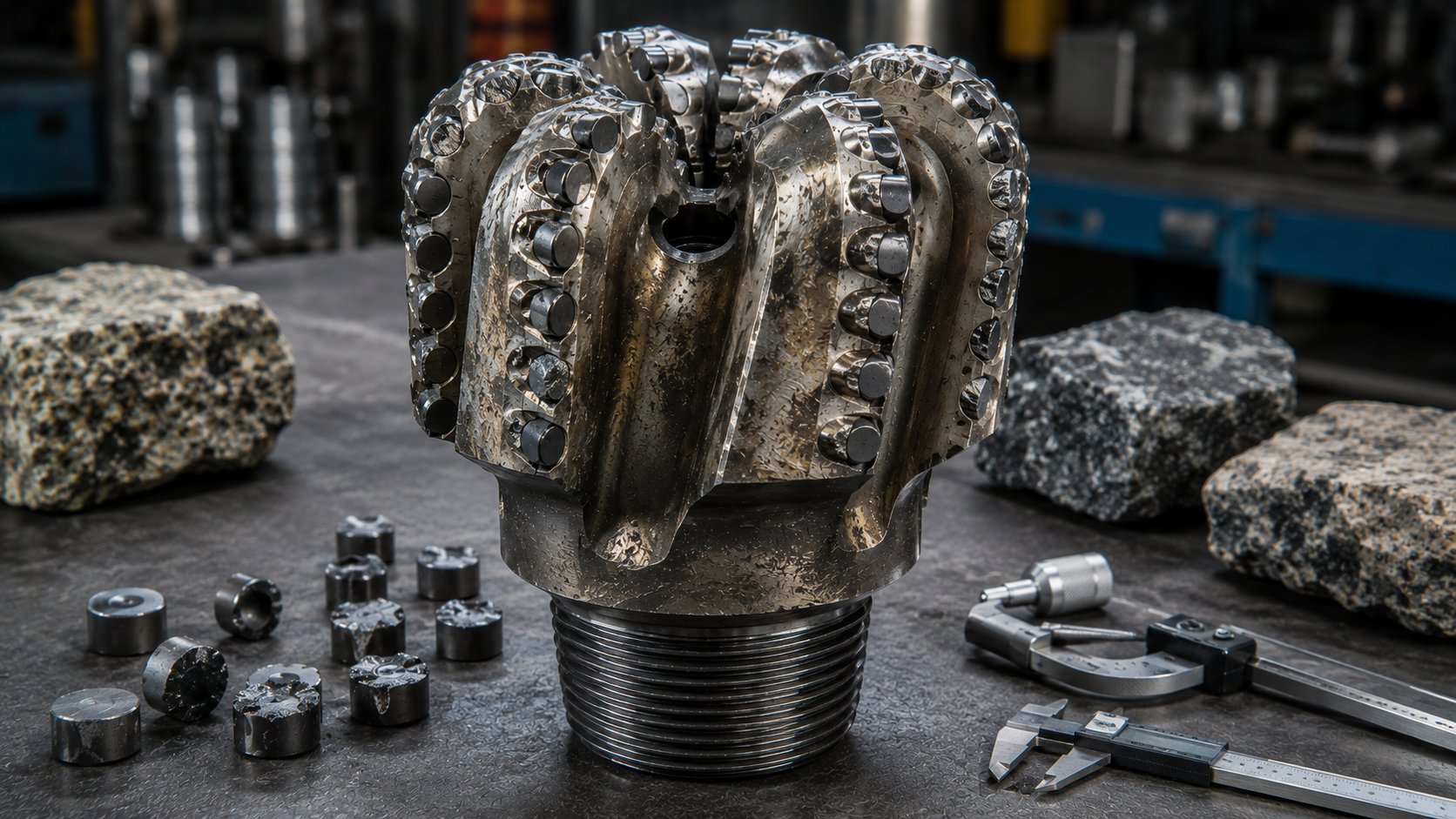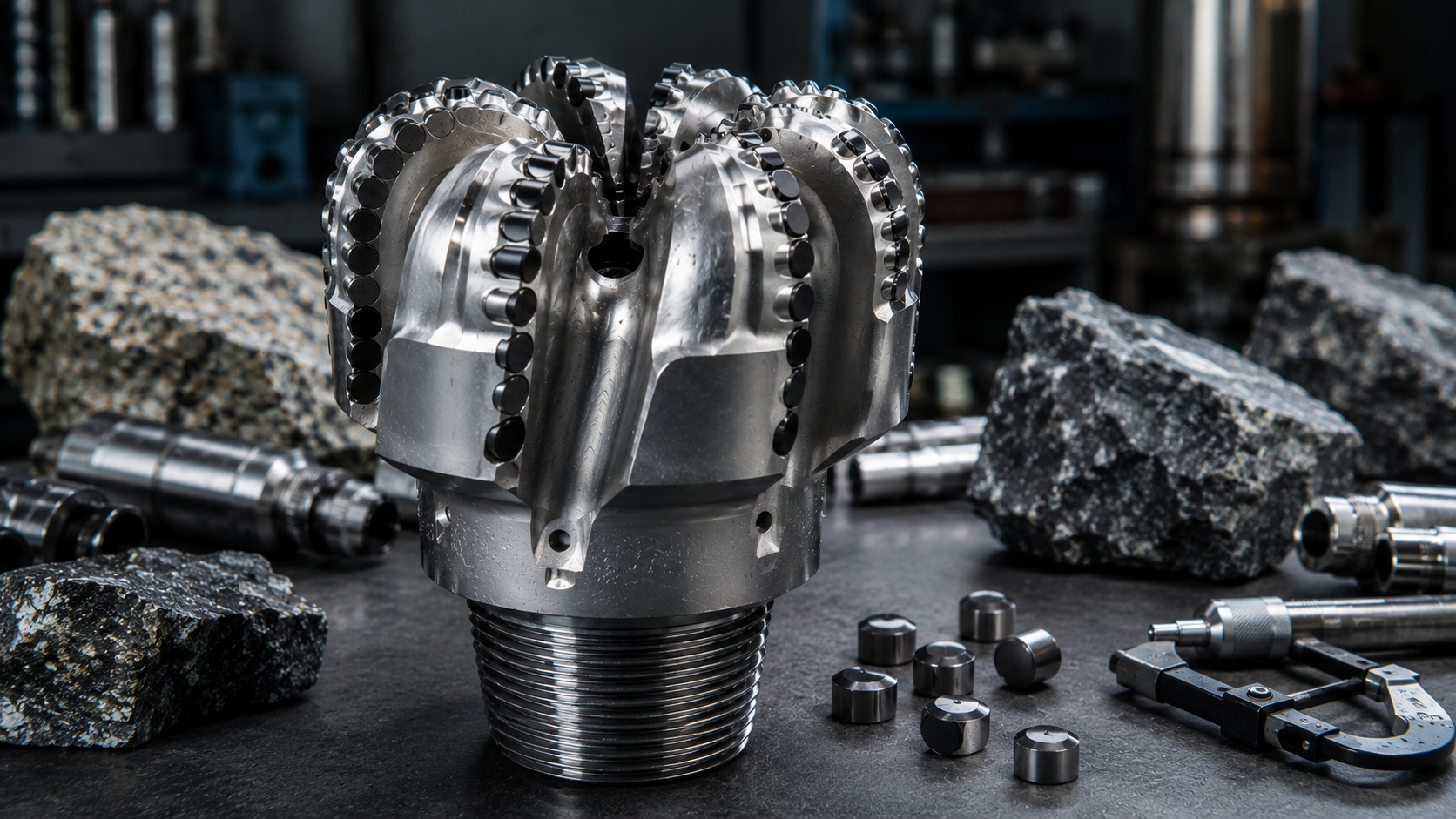
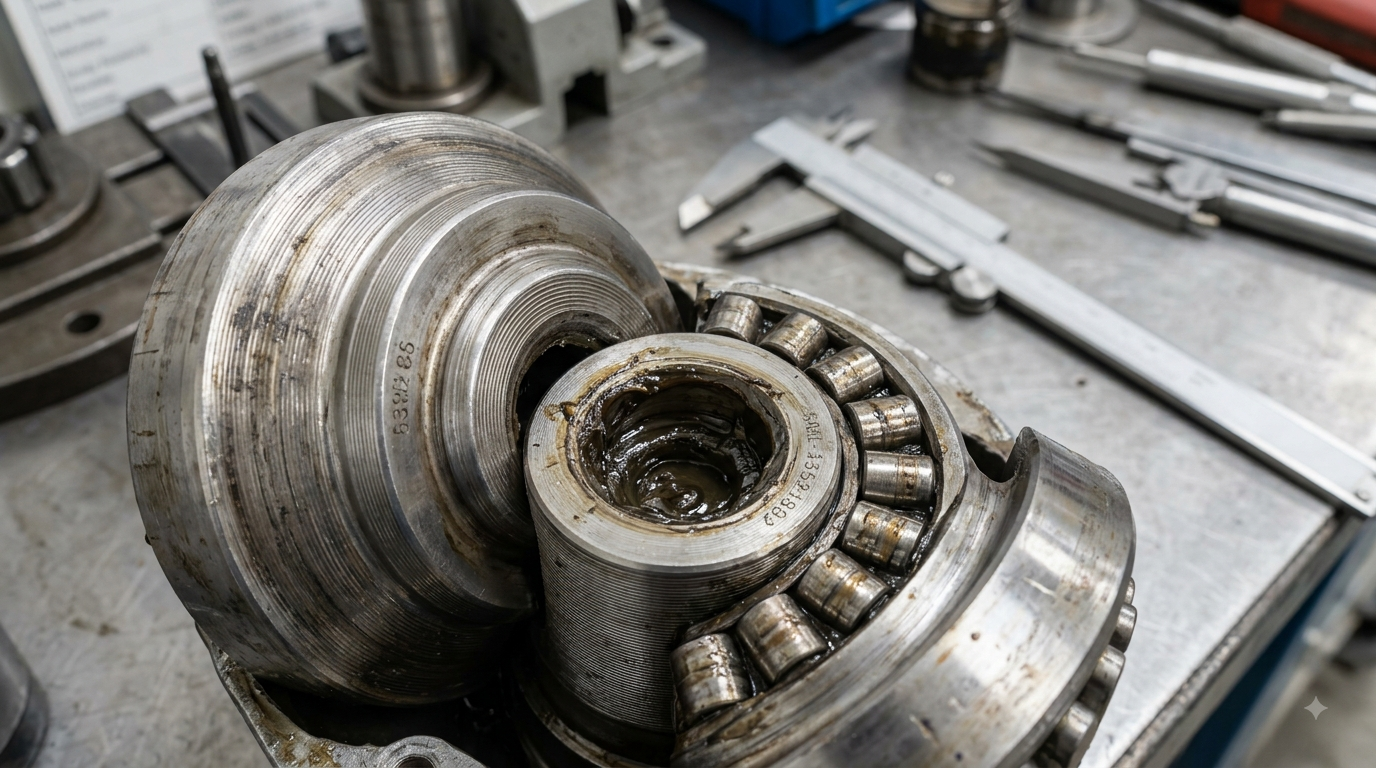
Properly evaluating pulled drill bits provides valuable operational data that helps prevent future downhole failures. Utilizing a standardized IADC dull bit grading guide allows engineers to identify cutter wear patterns, diagnose operational issues (such as vibration or improper hydraulic flow), and optimize parameters for subsequent drilling runs. Failing to accurately grade dull bits often leads to repeating the same operational mistakes across multiple well sections.
The International Association of Drilling Contractors (IADC) dull grading system uses an 8-character code system to record cutter wear, bearing condition, and the reason for pulling the bit.
The 8-System IADC Dull Bit Grading Code Breakdown
$$\text{[Inner Wear]} – \text{[Outer Wear]} – \text{[Dull Characteristic]} – \text{[Location]} – \text{[Bearing/Seal]} – \text{[Gauge]} – \text{[Other Characteristic]} – \text{[Reason Pulled]}$$
- Inner Cutting Structure (1–8): Grades wear on inner 2/3 of bit radius (0 = no wear; 8 = 100% wear/loss).
- Outer Cutting Structure (1–8): Grades wear on outer 1/3 of bit radius.
- Dull Main Characteristic (2-Letter Code):
- BC: Broken Cutter / Insert
- BT: Broken Teeth
- CT: Chipped Cutter
- RO: Ring Out (concentric ring wiped clean)
- HC: Heat Checking
- WO: Washed Out (fluid erosion)
- Location (1-Letter Code): Indicates where primary damage occurred (Nose, Shoulder, Cone, Gauge, All).
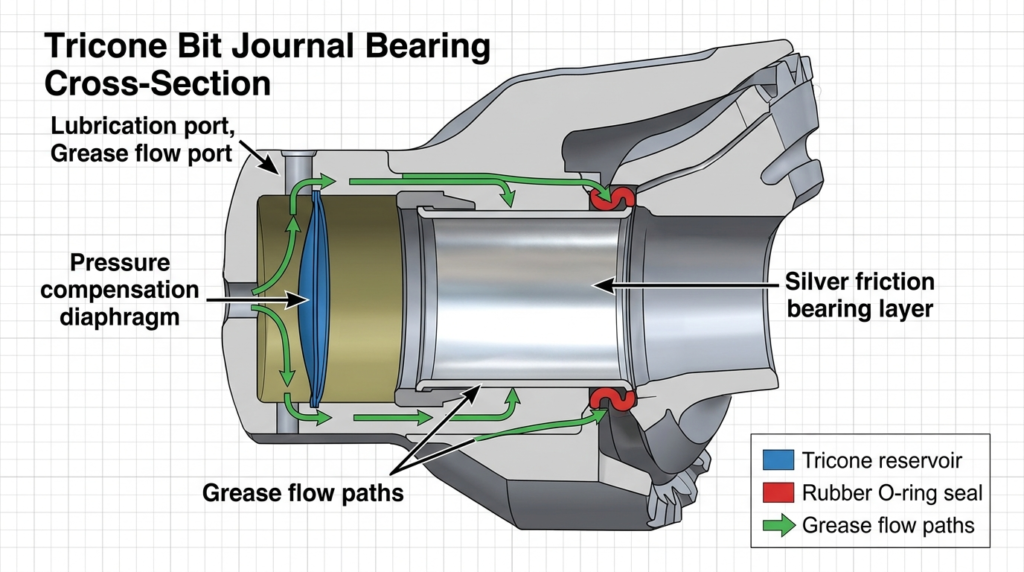
- Bearings / Seals:
- For non-sealed bits: 0 to 8 scale indicating bearing life used.
- For sealed bits: E (Seals Effective) or F (Seals Failed).
- Gauge Measurement: Amount the bit is undergauge, measured in fractions of an inch (1/16ths). I = In Gauge.
- Secondary Dull Characteristic: Identifies secondary damage mode using two-letter codes.
- Reason Pulled (2-Letter Code): Indicates why drilling stopped (BHA = Change Assembly; DMF = Downhole Motor Failure; RIG = Rig Repair; TD = Total Depth).
IADC Dull Bit Characteristics & Corrective Actions
| Dull Code | Common Description | Likely Root Cause | Recommended Operational Fix |
| CT (Chipped Cutters) | Impact fracturing on PDC edge | Torsional vibration / Stick-slip | Increase RPM; reduce WOB; adjust back rake |
| RO (Ring Out) | Concentric ring of lost cutters | Hard stringer impact or junk in hole | Switch to smaller cutter size (13mm); run junk basket |
| HC (Heat Checking) | Micro-cracks from thermal stress | Insufficient fluid flow / dry drilling | Increase GPM; lower rotary speed in hard rock |
| WO (Washed Out) | Body fluid erosion | High mud solids content / loose nozzle | Improve solids control; check nozzle O-rings |
Accurate dull bit analysis turns pulled bits into diagnostic tools for continuous performance improvement. If you need help analyzing dull bits or configuring customized rock bits for your next drilling campaign, contact our engineering team.
Lilin Bit provides high-performance tricone and PDC bits backed by strict metallurgical testing and API Spec 7-1 compliance. Visit our about us page to explore our complete manufacturing capabilities.