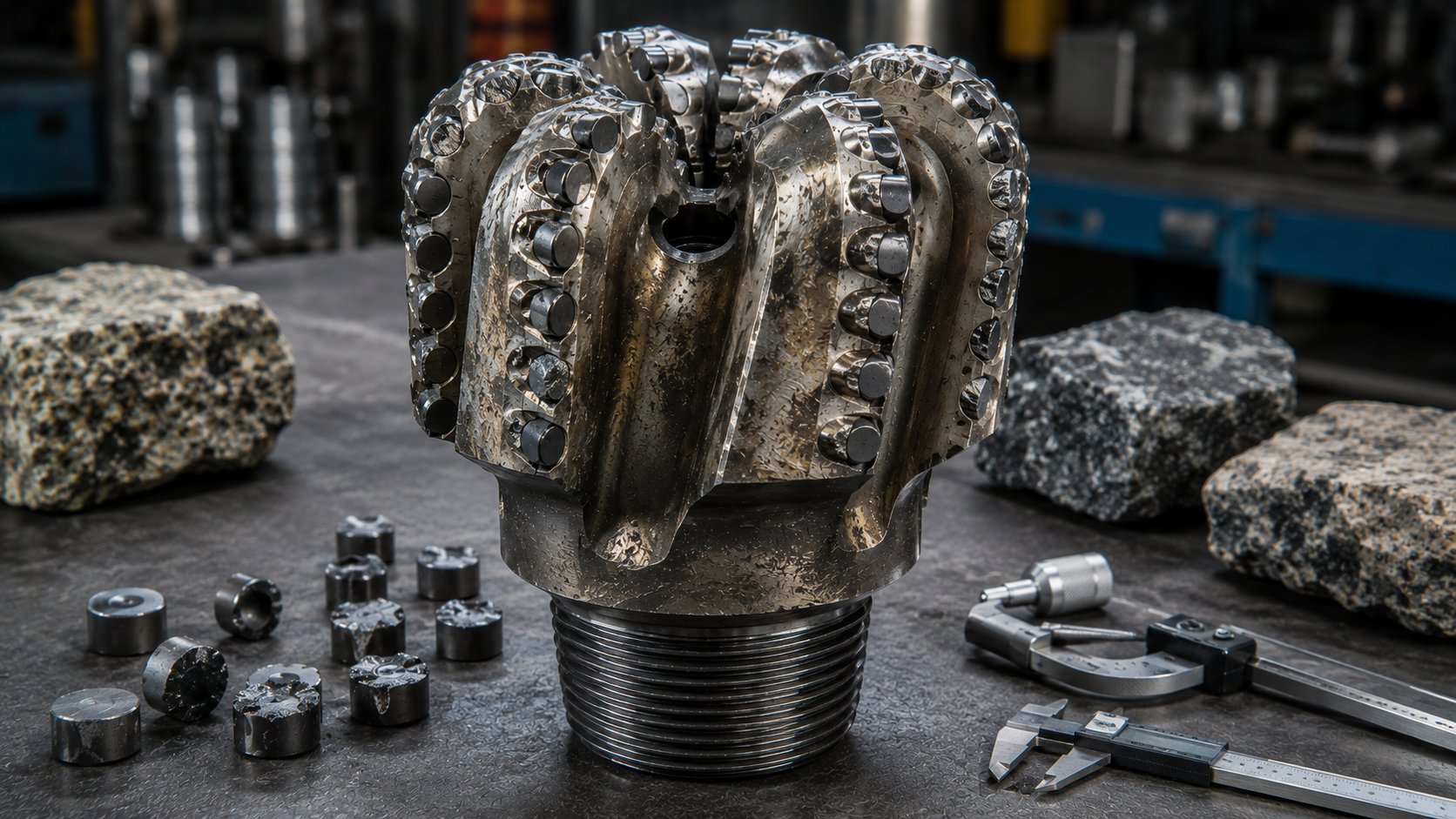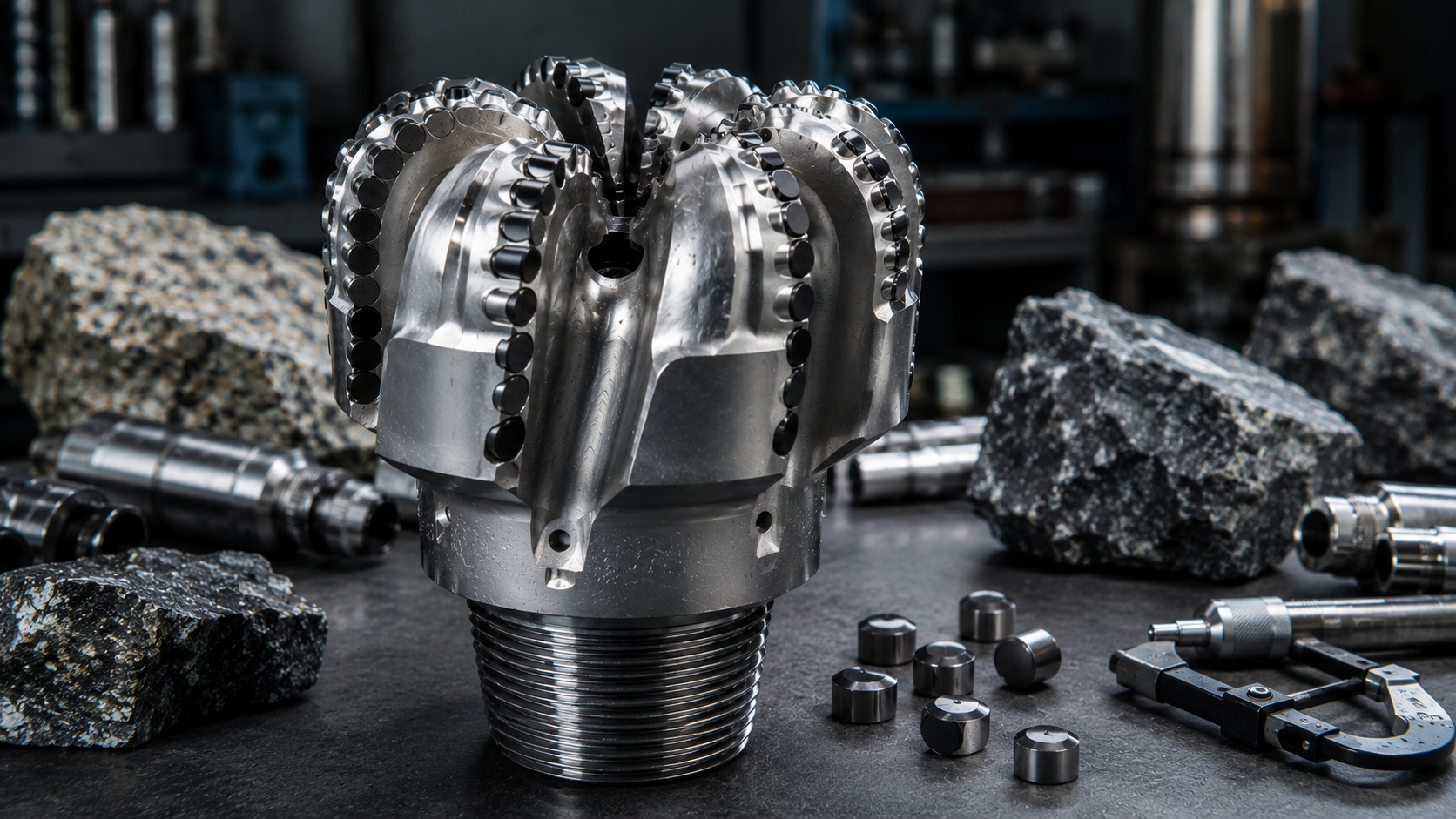
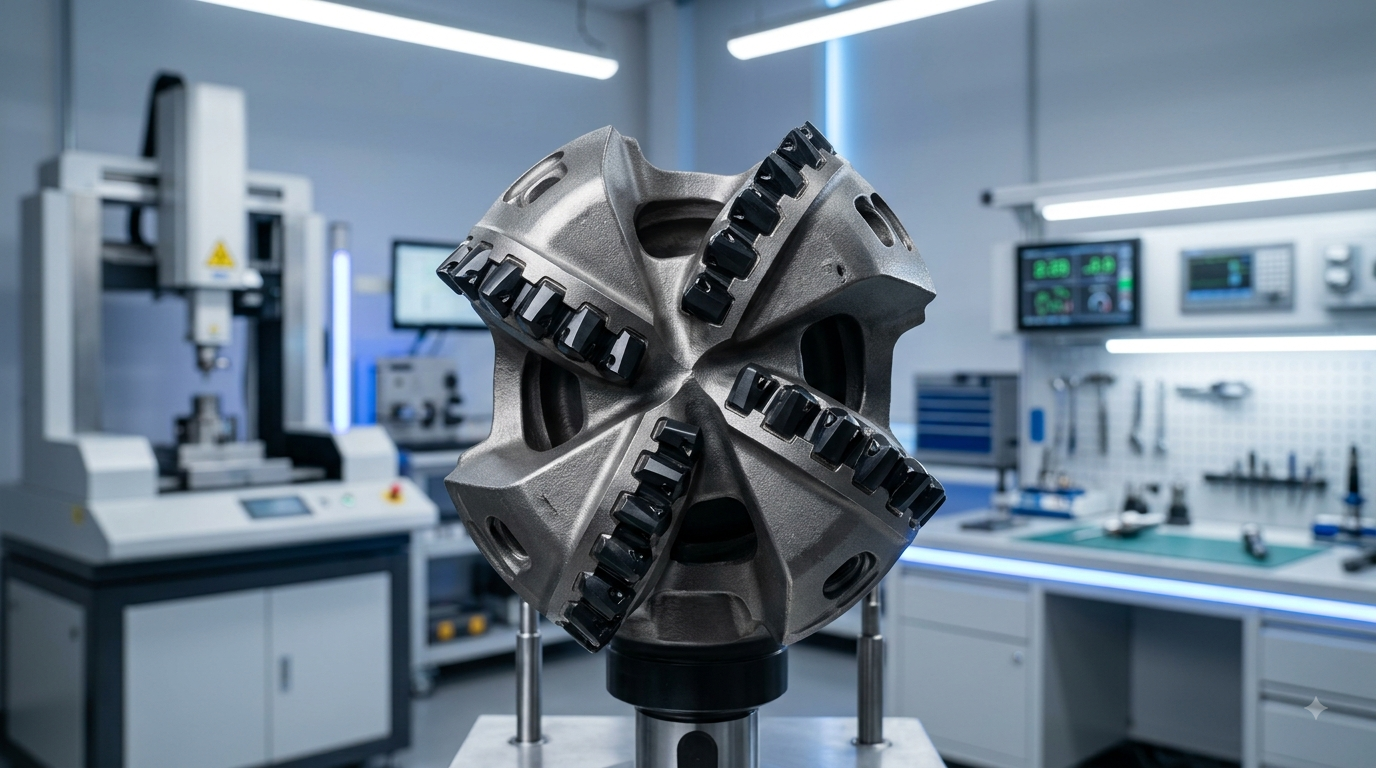
In Polycrystalline Diamond Compact (PDC) bit engineering, cutter diameter is the single most dominant variable controlling mechanical efficiency, torque response, and impact resistance. Drilling engineers frequently face a critical trade-off: larger cutters deliver aggressive rock shearing for maximum Rate of Penetration (ROP) but suffer from high cutter engagement forces and thermal fatigue in interbedded formations. Conversely, smaller cutters offer exceptional impact durability and smoother torque output but sacrifice depth of cut (DOC) in softer strata.
Selecting between 13mm, 16mm, and 19mm PDC cutters requires a quantitative analysis of formation unconfined compressive strength (UCS), rock abrasiveness, and available hydraulic horsepower on the rig floor.
The Mechanical Physics of Cutter Diameters
- 19mm (Large) Cutters: Engineered for high-volume rock removal in soft to medium formations (UCS < 10,000 PSI). They generate massive cuttings volume per revolution but demand substantial Weight on Bit (WOB) and torque.
- 16mm (Medium) Cutters: The industry standard for general-purpose drilling. They balance aggressiveness and durability, excelling in medium-hard limestones and sandstones (UCS 10,000 – 18,000 PSI).
- 13mm (Small) Cutters: Designed for high-impact, hard, and interbedded rock structures (UCS > 18,000 PSI). Smaller cutter radii generate higher localized point stress, fracturing hard formations while resisting cutter chipping and impact spalling.
Engineering Comparison: PDC Cutter Size Performance Parameters
The following technical comparison outlines operational parameters across the three primary cutter diameter standards:
| Cutter Size (Diameter) | Primary Target Lithology | Max Formation UCS (PSI) | Impact Resistance Rating | Shearing Efficiency (ROP) | Recommended Cutter Back Rake | Dynamic Torque Fluctuation |
| 19mm (3/4″) | Soft Shale, Anhydrite, Soft Salt | < 10,000 | Moderate | Very High | 15° – 20° | High (Requires Torque Control) |
| 16mm (5/8″) | Medium Sandstone, Limestone, Dolomite | 10,000 – 18,000 | High | Balanced | 20° – 25° | Medium |
| 13mm (1/2″) | Hard Granite, Chert, Interbedded Quartz | > 18,000 – 28,000 | Extremely High | Moderate to High | 25° – 30° | Very Low (Smooth Drilling) |
| 8mm / 10mm | Ultra-Hard, Abrasive Igneous Rock | > 30,000 | Maximum | Low (Grinding Action) | 30°+ | Negligible |
Hybrid Cutter Layouts and Matrix Body Engineering
Modern PDC bit design rarely relies on a single cutter size. High-performance bits utilize hybrid cutter layouts—combining primary 16mm or 19mm cutters on the shoulder for maximum volume removal with secondary 13mm cutters or depth-of-cut control (DOCC) inserts in the cone region to damp vibrations.
Furthermore, pairing cutter sizing with the correct body material (Matrix Body vs. Steel Body) is vital. Matrix body PDC bits, constructed from tungsten carbide powder composite, provide superior erosion resistance against high-velocity abrasive drilling muds.
Lilin Bit operates over 300 sets of advanced testing equipment and CNC machining units to forge matrix and steel body PDC bits tailored to complex global geological formations. Explore our municipal-level technical facility and manufacturing standards on our about us overview page.
Whether you need a custom 5-blade 16mm PDC bit for directional drilling or a heavy-set 13mm bit for abrasive sandstone, our engineering specialists are standing by. Contact us with your well profile for a complete bit proposal and factory-direct quote.